Welcome to the front lines of pulse-based thermodynamics. If you think a Spicy Lentil Stew is just a humble bowl of peasant food, you are fundamentally miscalculating the structural integrity of your dinner. We are not just boiling legumes; we are orchestrating a high-stakes chemical reaction involving protein coagulation, lipid-solubilized aromatics, and the precise calibration of capsaicin heat. This is about achieving the perfect viscous consistency without sacrificing the individual bite of the lentil. When executed with professional rigor, this dish becomes a masterclass in flavor layering. We are looking for a broth that is piquant, deeply savory, and possesses enough body to coat the back of a spoon with authority. Forget the mushy, gray sludge of amateur kitchens. We are here to build a vibrant, architecturally sound masterpiece that demands respect from the first spoonful to the final, lingering burn on the palate. Let us synchronize our digital scales and prepare for total legume saturation.
THE DATA MATRIX
| Metric | Specification |
|---|---|
| Prep Time | 20 Minutes |
| Execution Time | 45 Minutes |
| Yield | 4-6 Servings |
| Complexity (1-10) | 4 |
| Estimated Cost per Serving | $1.45 USD |
THE GATHERS
Ingredient Protocol:
- Legume Base: 400g / 2 cups Dried Brown or Green Lentils (rinsed and sorted).
- Aromatic Foundation: 200g / 1.5 cups Yellow Onion (finely diced).
- The Trinity: 120g / 1 cup Carrots and 100g / 0.75 cup Celery (small dice).
- Lipid Source: 45ml / 3 tbsp Extra Virgin Olive Oil.
- Piquant Catalyst: 30g / 2 tbsp Tomato Paste.
- Heat Profile: 5g / 1 tsp Smoked Paprika, 2g / 0.5 tsp Cayenne, and 5g / 1 tsp Cumin.
- Liquid Medium: 1.5L / 6 cups Low-Sodium Vegetable or Chicken Stock.
- Acid Adjustment: 15ml / 1 tbsp Fresh Lemon Juice.
- Finishing Greens: 100g / 2 cups Fresh Spinach or Kale (de-stemmed).
Section A: Ingredient Quality Audit:
If your lentils are older than a year, they will never reach the desired tenderness regardless of how long you simmer them. This is due to hard-to-cook (HTC) defect, where the cell walls become impenetrable. If your lentils remain crunchy after 60 minutes, your only fix is a pinch of baking soda to increase the pH level, which helps break down hemicellulose. Furthermore, ensure your spices are not dusty relics from the back of the pantry. If your cumin does not smell like a fragrant earth-bomb when you open the jar, toast it in a dry pan for 30 seconds to wake up the volatile oils before adding your lipids.
THE MASTERCLASS
Step 1: The Maillard Foundation
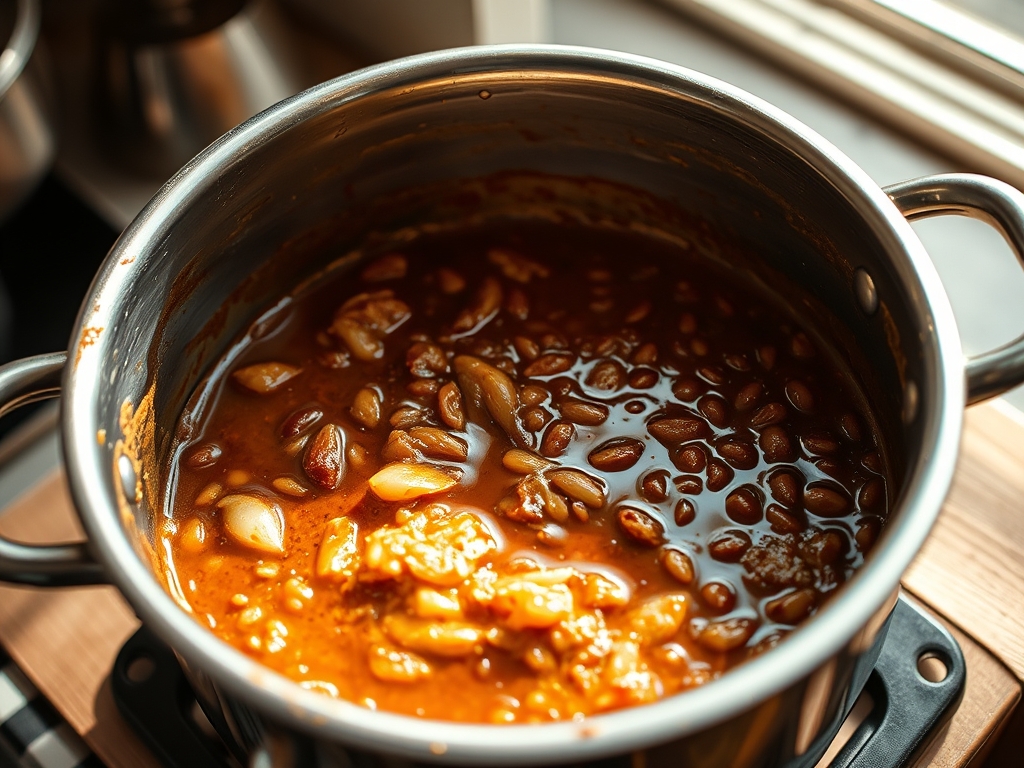
Heat your heavy-bottomed saucier or Dutch oven over medium-high heat. Add the olive oil and then the onions, carrots, and celery. Use a bench scraper to transfer your precision-cut mirepoix from the cutting board to the pot without losing a single cube. Sauté until the onions are translucent and the edges of the carrots begin to caramelize.
Pro Tip: This stage is about the Maillard reaction. By browning the sugars in the vegetables, you create a foundation of umami that water alone cannot provide. Use a wooden spoon to scrape the bottom constantly to prevent localized scorching.
Step 2: Toasting the Aromatics
Clear a small circle in the center of your vegetables and drop in the tomato paste and dry spices. Stir vigorously for 90 seconds until the paste turns a deep brick red and the oil takes on a vibrant orange hue.
Pro Tip: This process is called blooming. Many flavor compounds in spices are fat-soluble rather than water-soluble. By frying them briefly in oil, you infuse the lipid phase with flavor, ensuring the heat is distributed evenly throughout the entire Spicy Lentil Stew.
Step 3: Deglaze and Saturate
Add your rinsed lentils to the pot and stir to coat every single legume in the spiced oil. Immediately deglaze the pan by pouring in 250ml of your stock, using the liquid to lift any browned bits (fond) from the bottom. Add the remaining stock and bring to a rolling boil.
Pro Tip: Using a digital scale to measure your lentils ensures the ratio of starch to liquid is mathematically perfect. Too much liquid and you have a soup; too little and you have a dry mash. We are aiming for a viscous stew consistency.
Step 4: The Controlled Simmer
Reduce the heat to low, cover the pot partially, and let the mixture simmer for 30 to 35 minutes. Do not let it reach a violent boil; you want a gentle agitation that allows the lentils to absorb liquid without disintegrating their exterior hulls.
Pro Tip: Professional chefs use a cartouche (a parchment paper lid) to control evaporation more precisely than a standard metal lid. This ensures the top layer of lentils does not dry out while the bottom layer cooks.
Step 5: Texture Calibration and Finishing
Once the lentils are tender, use an immersion blender to pulse the stew 3 or 4 times. This releases just enough starch to aerate and thicken the broth without turning it into a puree. Stir in the spinach and lemon juice until the greens wilt.
Pro Tip: The addition of lemon juice at the end is a critical acid adjustment. It brightens the heavy earthy notes of the lentils and cuts through the richness of the olive oil, providing a balanced flavor profile.
Section B: Prep & Timing Fault-Lines:
The most common failure in Spicy Lentil Stew is the "Salt Barrier" error. If you salt your lentils too early in the simmering process, the sodium ions can strengthen the lentil skins, leading to a tough texture. Always season with kosher salt during the final 10 minutes of cooking. Additionally, if your heat is too high, the liquid will evaporate before the lentils can hydrate, leaving you with scorched protein at the bottom of your saucier. Maintain a "lazy bubble" throughout the execution.
THE VISUAL SPECTRUM
Section C: Thermal & Visual Troubleshooting:
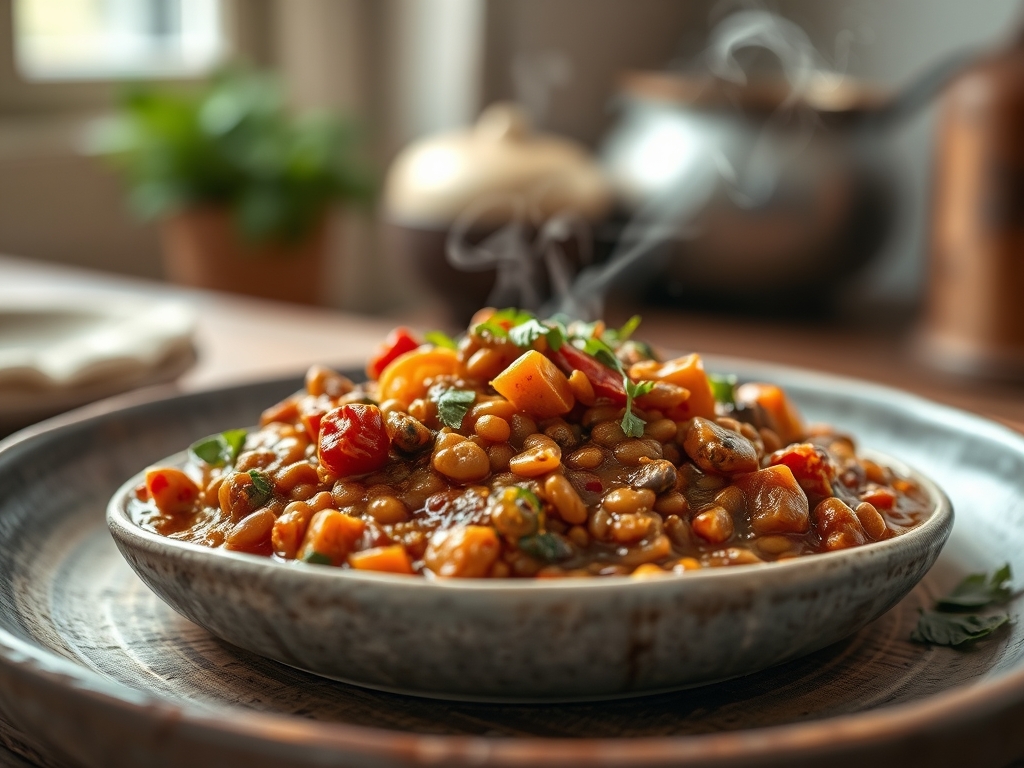
Referencing the Masterclass photo, your stew should exhibit a vibrant, rust-colored hue, not a dull brown. If your stew looks gray, you likely skipped the tomato paste blooming phase or used old, oxidized paprika. If the lentils look "exploded," you overcooked them or stirred too aggressively; the photo shows distinct, whole lentils suspended in a thick, velvety broth. If the spinach looks olive-drab instead of bright green, it was added too early. The residual heat of the stew is enough to wilt greens in 60 seconds; any longer and you lose the visual pop.
THE DEEP DIVE
Macro Nutrition Profile
Per serving, this stew is a nutritional powerhouse. You are looking at approximately 320 calories, 18g of protein, 12g of fiber, and only 9g of fat (mostly monounsaturated from the olive oil). It is a high-satiety meal with a low glycemic index, making it ideal for sustained energy.
Dietary Swaps
- Vegan: This recipe is naturally vegan as long as vegetable stock is utilized.
- Keto: Lentils are high in carbs; to adapt, replace 75% of the lentils with riced cauliflower and increase the fat content with heavy cream or coconut milk.
- GF: Naturally gluten-free. Ensure your vegetable stock is certified.
Meal Prep & Reheating Science
Lentils contain complex starches that undergo retrogradation when cooled. This means the stew will thicken significantly in the fridge. When reheating, add 30ml of water or stock per serving to restore the original molecular structure. Reheat on the stovetop over medium heat rather than the microwave to avoid "hot spots" that can rupture the lentils.
THE KITCHEN TABLE
Why are my lentils still crunchy after an hour?
Your lentils are likely old or your water is "hard" (high mineral content). Use filtered water or add a tiny pinch of baking soda to soften the skins and facilitate hydration.
Can I use red lentils instead?
Red lentils lack the structural integrity of green or brown varieties. They will dissolve into a smooth puree. If you want a chunky stew, stick to green, brown, or French Puy lentils.
How do I make it even spicier?
Incorporate a finely minced serrano pepper during the aromatic sauté or finish the dish with a swirl of Harissa paste. This adds depth and a "front-of-palate" burn to complement the smoky paprika.
Can I cook this in a pressure cooker?
Yes. High pressure reduces the time to 10 minutes. However, you lose the ability to monitor the viscous reduction of the broth, so you may need to simmer it uncovered after opening.