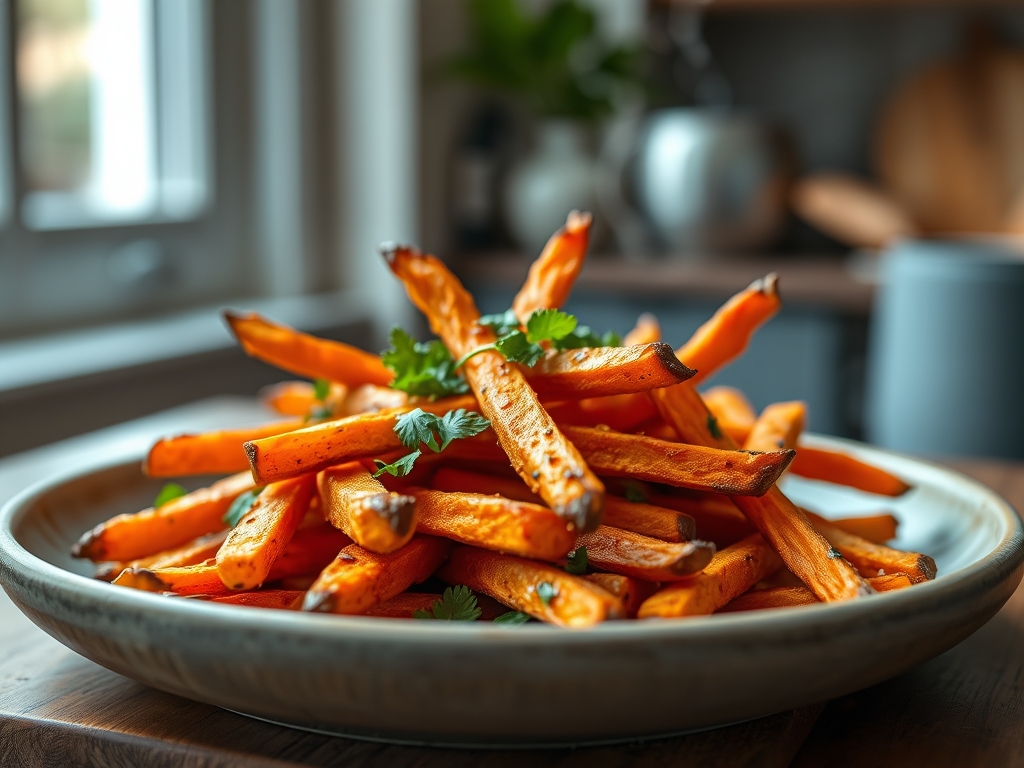
Listen up, carbon-based life forms. If you are still serving limp, orange sticks of sadness and calling them a side dish, your culinary license is officially under review. We are here to talk about the structural integrity and chemical brilliance of Spicy Sweet Potato Fries. This is not just a snack; it is a high-stakes engineering project involving the delicate balance of complex carbohydrates and the aggressive application of heat. When the natural sugars in the tuber meet the high-velocity air of an oven or the conductive power of oil, we trigger the Maillard reaction. This is the holy grail of flavor development. We are looking for that specific, shattered-glass crunch on the exterior that gives way to a creamy, custard-like interior. Then, we introduce a capsaicin-heavy dusting that clings to the surface like a second skin. It is piquant, it is vibrant, and it is scientifically superior to anything you have pulled out of a frozen bag. Let us calibrate your kitchen for maximum efficiency and flavor density.
THE DATA MATRIX
| Metric | Specification |
|---|---|
| Prep Time | 20 Minutes |
| Execution Time | 25 Minutes |
| Yield | 4 Servings |
| Complexity (1-10) | 4 |
| Estimated Cost per Serving | $1.15 |
THE GATHERS
Ingredient Protocol:
- 800g / 1.75 lbs Sweet Potatoes (Garnet or Jewel variety)
- 30ml / 2 tbsp Avocado Oil (High smoke point is non-negotiable)
- 15g / 1 tbsp Cornstarch or Arrowroot Powder
- 5g / 1 tsp Smoked Paprika
- 2.5g / 0.5 tsp Cayenne Pepper
- 5g / 1 tsp Garlic Powder
- 10g / 2 tsp Sea Salt
- 1.25g / 0.25 tsp Ground Black Pepper
- 15ml / 1 tbsp Fresh Lime Juice (To brighten the lipid profile)
Section A: Ingredient Quality Audit:
If your sweet potatoes feel spongy or show signs of shriveling at the tips, their starch-to-sugar ratio has shifted toward senescence. This results in a "gummy" fry that refuses to crisp. To fix this, soak your cut batons in ice-cold water for thirty minutes to leach out excess surface starch. If your spices smell like dusty cardboard, they have oxidized. Bloom them in a small amount of warm oil before application to infuse the fat with their remaining volatile oils. Always use a high smoke point fat; butter will burn long before the potato starches gelatinize, leading to a bitter, carbonized disaster.
THE MASTERCLASS
Step-by-Step Execution:
1. Precision Geometry and Tuber Preparation
Using a sharpened chef knife or a heavy-duty mandoline, slice the potatoes into uniform batons exactly 1cm thick. Consistency is the primary variable in thermal success. Use a bench scraper to efficiently transfer the cut fries into a large mixing bowl.
Pro Tip: Uniformity ensures that every fry reaches the optimal internal temperature at the same time. If your cuts vary, the smaller pieces will carbonize while the larger ones remain structurally flaccid.
2. The Starch Suspension Phase
Pat the fries bone-dry with lint-free towels. Moisture is the enemy of the crunch. Toss the dry fries with cornstarch until a thin, ghostly veil covers every surface. This creates a sacrificial layer that dehydrates rapidly in the heat.
Pro Tip: This starch layer increases the surface area for the Maillard reaction to occur. It acts as a desiccant, pulling moisture away from the skin so the oil can render the exterior crisp rather than steaming it.
3. Lipid and Spice Integration
In a small saucier or glass bowl, whisk together the avocado oil and the dry spice matrix. Drizzle this viscous slurry over the fries and toss aggressively. Ensure the capsaicin dusting is distributed with surgical precision across every millimeter of the potato.
Pro Tip: Mixing the spices into the oil before application prevents "clumping." It ensures that the heat-sensitive spices are insulated by the fat, preventing them from scorching during the high-heat roasting phase.
4. Thermal Deployment
Arrange the fries on a parchment-lined baking sheet. Do not crowd the pan. If the fries are touching, they will create a micro-climate of steam, ruining your texture. Roast at 220C / 425F for 20 to 25 minutes, flipping halfway through with a metal spatula.
Pro Tip: Use a digital scale to ensure your tray load does not exceed the thermal capacity of your oven. Overloading causes a massive temperature drop, leading to oil-soaked, soggy fries instead of crisp ones.
5. The Acidic Finish
Once the fries are removed from the heat and are still sizzling, hit them with a fine mist of lime juice. The acidity cuts through the dense sugars and fats, providing a bright counterpoint to the heat of the cayenne.
Pro Tip: Adding acid at the very end prevents the "soggy factor" that occurs if you add liquid too early. The residual heat will flash-evaporate the water in the juice, leaving only the concentrated citrus zest behind.
Section B: Prep & Timing Fault-Lines:
The most common human error is "The Crowded Tray." If you see steam rising in thick clouds from your oven, you have failed the airflow test. Space them out or use a perforated convection rack. Another fault-line is the "Cold Start." Never put your fries into an oven that hasn't reached its target temperature for at least ten minutes. You need that initial thermal shock to aerate the surface starches and lock in the shape.
THE VISUAL SPECTRUM
Section C: Thermal & Visual Troubleshooting:
Referencing the Masterclass photo, you are looking for "blistered" edges. If your fries look pale and matte, they are undercooked or lacked enough oil to conduct heat. If they are dark brown but limp, you likely skipped the drying phase; the interior steamed the exterior from the inside out. The ideal visual cue is a deep, burnished orange with dark, caramelized tips. If the spices look black, lower your rack position in the oven. The goal is a sunset hue that promises both sweetness and a piquant kick.
THE DEEP DIVE
Macro Nutrition Profile:
A standard serving provides approximately 210 calories, 9g of healthy fats (from avocado oil), 32g of complex carbohydrates, and 4g of fiber. They are a powerhouse of Vitamin A and potassium, making them a functional fuel source rather than empty calories.
Dietary Swaps:
- Vegan: Already compliant.
- Keto: Substitute sweet potatoes with jicama or daikon radish, though the Maillard reaction will be less pronounced due to lower sugar content.
- GF: Ensure your cornstarch is certified gluten-free.
Meal Prep & Reheating Science:
To maintain molecular structure, never reheat these in a microwave. The microwave agitates water molecules, turning your fries into mush. Instead, use an air fryer or a toaster oven at 200C / 400F for three minutes. This re-dehydrates the surface and restores the crispness without overcooking the core.
THE KITCHEN TABLE
Why are my fries soggy even after baking?
You likely skipped the soaking or drying phase. Surface moisture turns to steam, which softens the starch cell walls. Ensure they are bone-dry and coated in a thin layer of starch before adding oil.
Can I use olive oil instead of avocado oil?
Extra virgin olive oil has a low smoke point and will oxidize at 220C, creating off-flavors. Use refined avocado oil or grapeseed oil for their high thermal stability and neutral flavor profiles.
How do I make them extra spicy without ruining the flavor?
Incorporate a teaspoon of gochugaru or chipotle powder. These provide "depth of heat" rather than just a sharp sting. The smoky undertones complement the natural sweetness of the tuber perfectly.
Do I need to peel the sweet potatoes?
Peeling is optional but recommended for maximum spice adhesion. The skin can sometimes act as a barrier, preventing the starch and oil slurry from bonding directly with the starchy flesh of the potato.