The roar of a high-output burner is the soundtrack of culinary excellence. When you drop fresh legumes into a screaming hot wok, you are not just cooking; you are engaging in a high-stakes thermal negotiation. We are chasing the "dry-fry" effect, a technique where moisture is violently evicted from the vegetable to create a blistered, puckered skin while maintaining a snap in the center. This is the hallmark of world-class Spicy Green Beans. If your beans look like limp, steamed grass, you have failed the audit. We want charred topography, deep umami saturation, and a piquant kick that resets your nervous system. This process relies on the Maillard reaction occurring at lightning speed before the internal cell walls collapse into mush. We are looking for that specific "tiger skin" texture that only comes from precise heat management and the strategic application of oil. This is not a side dish. This is a technical demonstration of heat transfer and flavor layering. Let us get to work.
THE DATA MATRIX
| Metric | Specification |
|---|---|
| Prep Time | 15 Minutes |
| Execution Time | 8 Minutes |
| Yield | 4 Servings |
| Complexity (1-10) | 6 (Heat Control Critical) |
| Estimated Cost per Serving | $1.85 USD |
THE GATHERS
Ingredient Protocol:
- 450g / 1 lb Fresh String Beans (ends trimmed and snapped)
- 15g / 1 tbsp Neutral Oil (Grape seed or Avocado)
- 100g / 3.5 oz Ground Pork or finely chopped Shiitake Mushrooms
- 15ml / 1 tbsp Light Soy Sauce
- 10ml / 2 tsp Dark Soy Sauce (for pigment)
- 5g / 1 tsp Granulated Sugar
- 15g / 3 cloves Garlic (minced)
- 10g / 1 inch Ginger (grated)
- 30g / 2 tbsp Sui Mi Ya Cai (preserved mustard greens)
- 5g / 1 tsp Dried Red Chili Flakes or 4 whole Szechuan Chilies
- 2g / 0.5 tsp Szechuan Peppercorn Powder
Section A: Ingredient Quality Audit:
The primary failure point in Spicy Green Beans is moisture content. If your beans are damp from washing, they will steam rather than blister. Technical fix: Use a salad spinner followed by a 20-minute air-dry on a perforated tray. If your beans are flaccid or "rubbery" before they hit the pan, they have lost turgor pressure. Revive them by submerging them in an ice-water bath for 30 minutes, then drying thoroughly. Sub-par aromatics are also a common audit failure. If your ginger is fibrous and dry, it will not infuse the oil properly. Ensure all aromatics are fresh and prepped with a sharp knife to avoid bruising the cellular structure, which leads to bitter oxidation.
THE MASTERCLASS
Step-by-Step Execution:
1. The Thermal Foundation
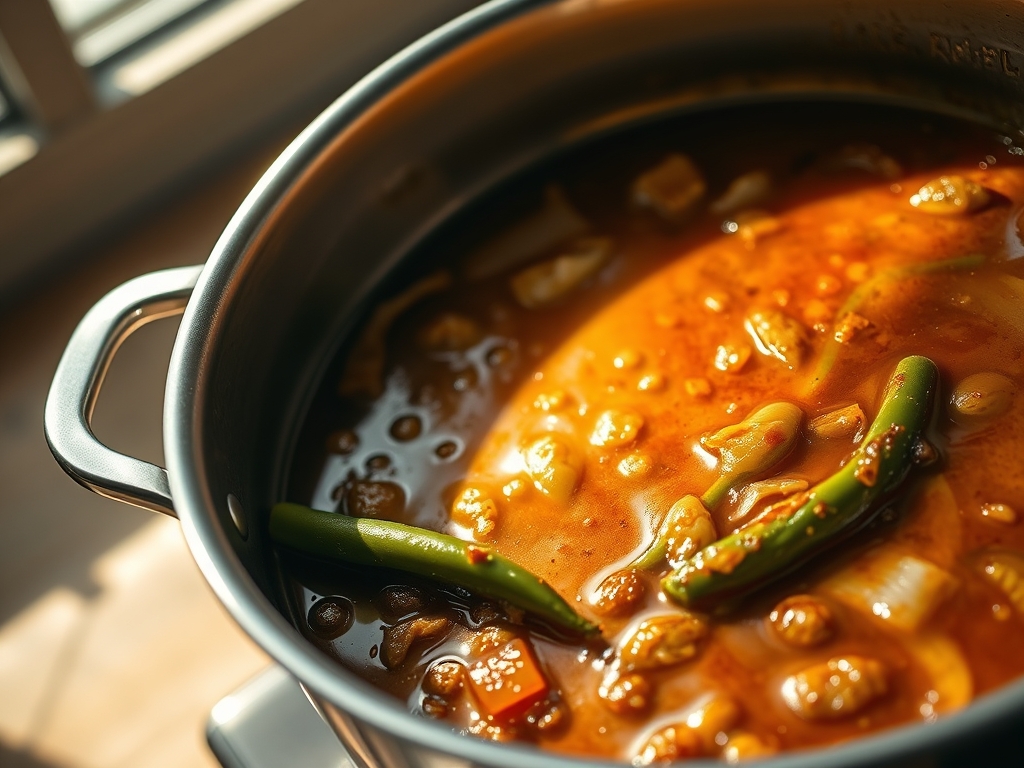
Place your wok or heavy-bottomed saucier over high heat until it begins to wisp with blue smoke. Add the neutral oil and swirl to coat the surface. Once the oil reaches approximately 190C (375F), verified by an infrared thermometer, add the beans in a single layer.
Pro Tip: This stage is about conduction. By using a high-smoke-point oil and a preheated vessel, you trigger immediate surface evaporation. This prevents the beans from absorbing excess fat and becoming greasy.
2. The Blistering Phase
Allow the beans to sit undisturbed for 60 seconds to develop a char. Toss frequently for the next 4 to 5 minutes until the skins appear puckered and "blistered." Remove the beans from the pan and set them aside on a wire rack to prevent carry-over steaming.
Pro Tip: Professional chefs use a digital scale to ensure the bean-to-oil ratio is exact. Too much oil leads to deep-frying; too little leads to scorching without texture.
3. The Protein & Aromatic Render
In the same pan, add the ground protein. Use a bench scraper or metal spatula to break it into fine crumbles. Cook until the fat begins to render and the edges turn crispy. Add the garlic, ginger, and preserved mustard greens.
Pro Tip: The fat released from the protein acts as a solvent for the fat-soluble compounds in the aromatics. This creates a viscous flavor base that will later cling to the beans.
4. The Flavor Integration
Return the beans to the pan. Toss in the dried chilies and Szechuan peppercorn powder. Pour the soy sauce and sugar mixture around the perimeter of the wok so it sizzles and caramelizes before hitting the ingredients.
Pro Tip: This "wok edge" technique facilitates a rapid deglaze, capturing the concentrated sugars and proteins stuck to the pan and redistributing them as a savory glaze.
5. The Final Aeration
Perform a series of high-tosses to aerate the sauce and ensure every bean is coated in the piquant debris of chili and pork. The sauce should be tight and clinging, not pooling at the bottom.
Pro Tip: Aeration cools the surface of the beans slightly, which helps the sauce emulsify with the rendered fats, creating a glossy, professional finish.
Section B: Prep & Timing Fault-Lines:
The most frequent human error is "crowding the pan." If you dump 1kg of beans into a standard home wok, the temperature will plummet. This causes the beans to release water, resulting in a soggy, gray mess. Audit solution: Cook in batches. Another timing fault is adding the garlic too early. Garlic burns at a lower temperature than the beans require for blistering. Always execute the "dry-fry" of the beans first, remove them, and then handle your delicate aromatics. Use a timer to ensure the aromatics do not spend more than 30 seconds in the pan before the liquid components are added.
THE VISUAL SPECTRUM
Section C: Thermal & Visual Troubleshooting:
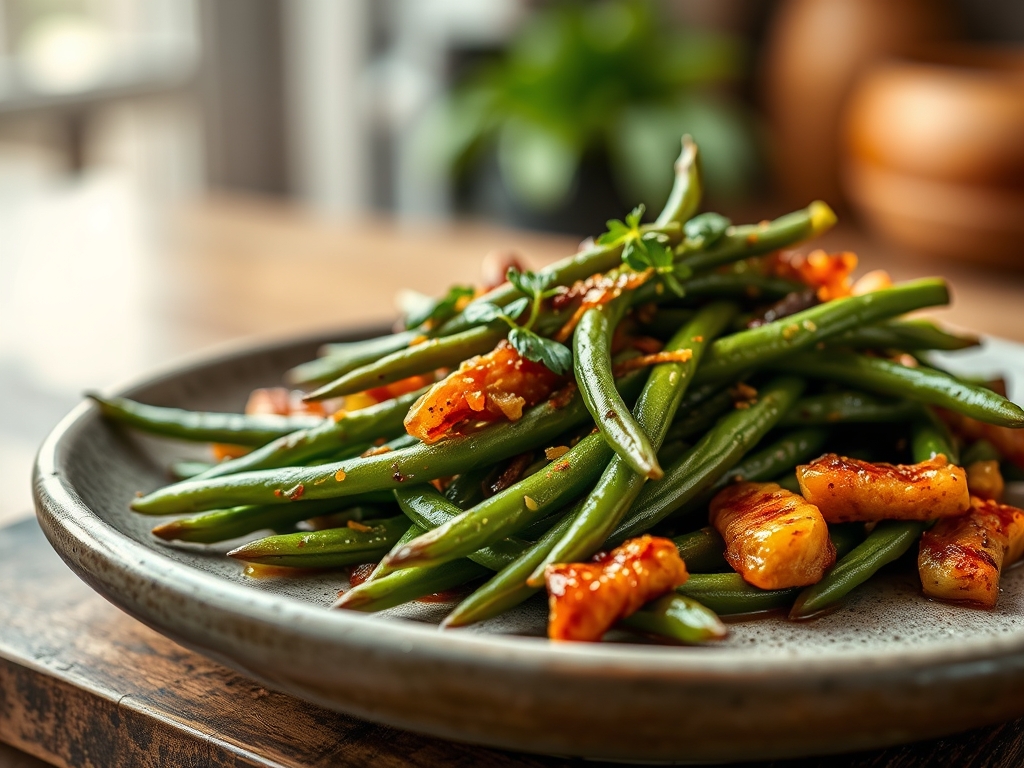
Look at the Masterclass photo. Notice the high-contrast "tiger skin" effect; those dark brown charred spots against the vibrant green. If your beans are a uniform, dull olive color, you have overcooked them at too low a temperature, destroying the chlorophyll. If the beans are bright green but have no char, your pan wasn't hot enough. Uneven browning usually indicates poor tossing technique or an uneven heat source. To fix dull colors, ensure you add the dark soy sauce sparingly; it is for pigment depth, while light soy sauce provides the salt profile. The final dish should look "busy" with bits of chili, mustard greens, and protein clinging to the blistered surfaces.
THE DEEP DIVE
Macro Nutrition Profile:
A standard serving of Spicy Green Beans provides approximately 180 calories, 12g of fat, 10g of protein, and 8g of net carbohydrates. The high fiber content of the legumes ensures a low glycemic response, making this an excellent choice for metabolic health.
Dietary Swaps:
- Vegan: Replace ground pork with finely minced shiitake mushrooms or rehydrated soy crumbles. Use a vegan-certified "oyster" sauce or mushroom sauce for extra depth.
- Keto: Omit the sugar and use a monk fruit sweetener. Ensure the preserved vegetables do not contain added starches.
- GF: Replace soy sauce with Tamari or liquid aminos.
Meal Prep & Reheating Science:
To maintain the molecular structure when reheating, avoid the microwave. Microwaves vibrate water molecules, which will turn your crisp-tender beans into mush. Instead, flash-fry them in a hot skillet for 2 minutes to re-crisp the skins and redistribute the oils.
THE KITCHEN TABLE
Why are my green beans tough instead of crunchy?
You likely skipped the "dry-fry" phase or used older, fibrous beans. High heat is required to break down the tough cellulose while leaving the interior "snap" intact.
Can I use frozen green beans for this?
Negative. Frozen beans have compromised cell walls due to ice crystal formation. When thawed, they release too much water, making the signature blistering effect impossible to achieve.
What if I cannot find Sui Mi Ya Cai?
You can substitute with finely chopped pickled radish or even kimchi for a different fermented funk. The goal is to provide an acidic, salty counterpoint to the heat.
Is the Szechuan peppercorn mandatory?
Technically, no; but without it, you lose the "mala" (numbing and spicy) sensation that defines the dish. It provides the essential vibration that balances the piquant chilies.