Listen up, starch enthusiasts and heat seekers. We are not just baking bread; we are conducting a high-stakes structural audit on the most versatile canvas in the Mediterranean repertoire. When you introduce capsaicin into a high-hydration dough, you are not merely adding flavor. You are initiating a chemical skirmish within the gluten network. The goal is a crumb that is airy, translucent, and structurally sound, yet punctuated by the aggressive, piquant bite of a well-executed Spicy Focaccia Bread. This is where the physics of fermentation meets the chemistry of heat. We are looking for a crumb structure so open it looks like a geological survey of a limestone cavern, saturated with a vibrant, chili-infused lipid layer that stains the fingertips and ignites the palate. If your bread feels like a dense brick of sadness, your hydration ratios are off or your yeast has surrendered. We do not accept mediocrity here. We demand a crust that shatters like glass and an interior that feels like a cloud infused with the fire of a thousand suns.
THE DATA MATRIX
| Metric | Specification |
|---|---|
| Prep Time | 20 Minutes (Active) |
| Execution Time | 18 – 24 Hours (Cold Fermentation) |
| Yield | 1 Half-Sheet Pan (12 Servings) |
| Complexity | 6 / 10 |
| Estimated Cost per Serving | $0.85 USD |
THE GATHERS
Ingredient Protocol:
- 500g / 3.8 cups High-Protein Bread Flour (12.5% protein minimum)
- 400ml / 1.7 cups Filtered Water (Room temperature, 21C / 70F)
- 10g / 2 tsp Fine Sea Salt
- 4g / 1.25 tsp Instant Yeast
- 60ml / 4 tbsp Extra Virgin Olive Oil (Divided)
- 15g / 1 tbsp Red Chili Flakes or Aleppo Pepper
- 3-4 Fresh Fresno Chilies (Thinly sliced)
- 2 cloves Garlic (Microplaned into the oil)
- 5g / 1 tsp Flaky Maldon Salt (For finishing)
Section A: Ingredient Quality Audit:
Sub-par raw materials are the silent killers of the Spicy Focaccia Bread. If your flour has a low protein content, the gluten network will collapse under the weight of the added oils and chili inclusions. Fix: Supplement with 10g of Vital Wheat Gluten if using All-Purpose flour. If your yeast is sluggish, perform a viability test in warm water with a pinch of sugar; if it does not foam within five minutes, discard it. For the chilies, ensure they are fresh and turgid. Soft, rubbery chilies indicate moisture loss and a degradation of the aromatic compounds. If using dried flakes, ensure they are not dull or brown, which suggests oxidation. Use high-quality oil; a rancid lipid profile will amplify the heat in an unpleasant, metallic way.
THE MASTERCLASS
1. Autolysis and Initial Hydration
Combine your flour and water in a large glass bowl until no dry streaks remain. Let this slurry rest for 30 minutes. This allows the flour to fully hydrate and the gluten to begin forming autonomously. Pro Tip: Use a digital scale for this step. Volumetric measurements are for amateurs; precision in hydration is the difference between a supple crumb and a dry disaster.
2. The Inoculation and Salt Integration
Sprinkle the yeast and sea salt over the hydrated mass. Use the "pincer method" with your hand to fold the salt into the dough. Add 20ml of olive oil. Pro Tip: The salt regulates yeast activity and strengthens the protein bonds. Use a bench scraper to clean the sides of the bowl, ensuring every gram of material is integrated into the matrix.
3. The Bulk Fermentation and Fold Sequence
Perform four sets of "stretch and folds" every 30 minutes. During the second set, fold in half of your chili flakes. This distributes the heat without tearing the developing gluten. Pro Tip: Wet your hands before touching the dough to prevent sticking. This "coil fold" technique builds vertical tension, which is essential for that signature Spicy Focaccia Bread height.
4. Cold Proofing for Flavor Development
Transfer the dough to a greased container and refrigerate for 18 to 24 hours. This cold environment slows yeast activity, allowing bacteria to produce complex organic acids. Pro Tip: This is where the magic happens. A long cold ferment allows the chili oils to infuse deeply into the starch molecules, creating a holistic heat profile rather than isolated spicy hot spots.
5. The Dimpling and Infusion
Transfer the cold dough to a heavily oiled sheet pan. Let it proof at room temperature for 2-4 hours until it reaches the corners and looks bubbly. Drizzle with the remaining oil, garlic, and fresh chili slices. Use your fingertips to press deep indentations into the dough. Pro Tip: Do not be shy. You want to create "oil pools" that will render the crust crispy while the interior remains soft.
6. Thermal Execution
Bake at 220C / 425F for 20-25 minutes. The high heat triggers the Maillard reaction, creating a golden-brown crust. Pro Tip: Use an infrared thermometer to check the oven floor temperature. If the bottom isn't crisping, move the pan to the lowest rack for the final five minutes to ensure the base is properly fried in the olive oil.
Section B: Prep & Timing Fault-Lines:
The most common failure is rushing the room-temperature proof. If the dough is still cold when it hits the oven, it will not aerate properly, resulting in a gummy, dense texture. Another timing error is adding the garlic too early or too high in the oven; garlic has a low burn point and will turn bitter. If your oven runs hot, tent the bread with foil halfway through to protect the chilies from carbonizing while the internal structure finishes setting.
THE VISUAL SPECTRUM
Section C: Thermal & Visual Troubleshooting:
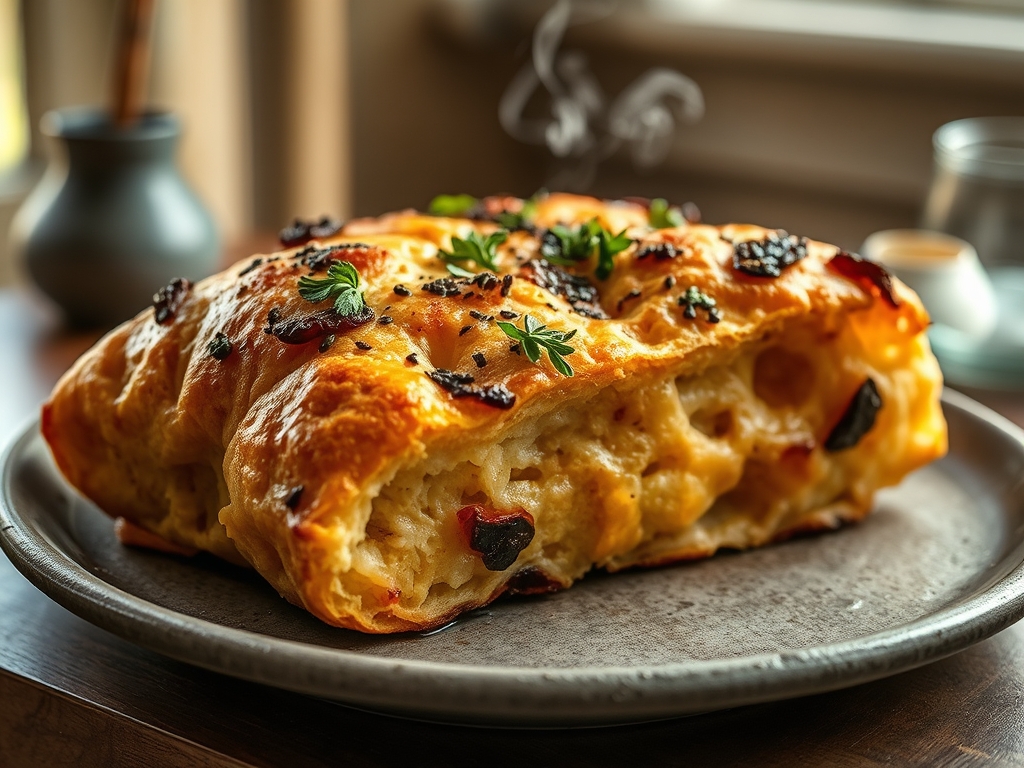
Look at the Masterclass photo. Notice the "leopard spotting" on the crust; this is a hallmark of long fermentation. If your bread is a uniform, dull tan, you likely under-fermented or your oven was too cold. If the chilies look black and shriveled, they were sliced too thin or exposed to direct heating elements for too long. The oil pools should be vibrant red or orange from the chili infusion. If the oil is clear, you didn't allow the spices to infuse properly during the dimpling stage. A perfect Spicy Focaccia Bread should have a visible "shimmer" from the lipid coating, indicating a moist, high-fat crumb.
THE DEEP DIVE
Macro Nutrition Profile:
A standard serving contains approximately 210 calories, 32g of carbohydrates, 5g of protein, and 8g of fat. The capsaicin provides a metabolic boost, though it is largely offset by the delicious, necessary olive oil.
Dietary Swaps:
- Vegan: Naturally vegan as written.
- Keto: Replace bread flour with a blend of almond flour, vital wheat gluten, and oat fiber (Note: Texture will be significantly denser).
- GF: Use a high-quality 1-to-1 gluten-free baking flour and increase water by 10% to account for higher absorption rates.
Meal Prep & Reheating Science:
To maintain the molecular structure, never microwave focaccia. The steam will turn the crust into rubber. Instead, reheat in a 175C / 350F oven for 5-8 minutes. This re-crisps the exterior lipids and softens the internal starches without dehydrating the crumb.
THE KITCHEN TABLE
Why is my focaccia sticking to the pan?
You likely didn't use enough oil or your pan is not non-stick. Focaccia is essentially "fried" in the pan; do not be afraid of the oil. It is the barrier that ensures a clean release.
Can I use fresh habaneros instead of Fresnos?
Yes, but proceed with caution. Habaneros have a significantly higher Scoville rating. Ensure you mince them finely to avoid "heat bombs" that overwhelm the delicate fermentation flavors of the bread.
My dough didn't rise in the fridge. Why?
Your refrigerator might be too cold (below 3C / 37F), which puts the yeast into a complete dormant state. Alternatively, your yeast was expired. Try leaving it at room temperature for an hour before refrigerating.
How do I get bigger bubbles?
Increase the hydration and handle the dough as gently as possible during the dimpling stage. Every time you press down, you are degassing the dough. Aim for "gentle indentations" rather than aggressive poking.