Stop treating your greens like a decorative afterthought. If you are still steaming your vegetables into a limp, sulfurous submission, you are committing a crime against culinary infrastructure. We are here to talk about the undisputed heavyweight champion of the brassica family: Spicy Broccoli Rabe. This is not the mild, polite broccoli found in a suburban lunchbox. This is rapini. It is aggressive; it is bitter; it is unapologetically bold. When you introduce high-grade lipids and capsaicin to these stalks, you trigger a chemical transformation that turns a humble bunch of greens into a high-performance side dish. The goal is a perfect synergy of char and heat. We want the florets to act as sponges for infused garlic oil while the stems maintain a structural snap. We are aiming for a piquant profile that cuts through the richest proteins on your plate. This is not just cooking; it is an audit of texture and thermal application. Prepare to recalibrate your palate for the glorious friction of bitter heat.
THE DATA MATRIX
| Metric | Specification |
|---|---|
| Prep Time | 10 Minutes |
| Execution Time | 12 Minutes |
| Yield | 4 Servings |
| Complexity | 4 / 10 |
| Estimated Cost per Serving | $1.75 USD |
THE GATHERS
Ingredient Protocol:
- 2 Large Bunches / 900g Broccoli Rabe (Rapini)
- 60ml / 4 tbsp Extra Virgin Olive Oil (High Phenolic)
- 4 Large Cloves / 20g Fresh Garlic (Slivered)
- 5g / 1 tsp Red Chili Flakes (Adjust for heat tolerance)
- 5g / 1 tsp Kosher Salt
- 2g / 0.5 tsp Coarsely Cracked Black Pepper
- 15ml / 1 tbsp Fresh Lemon Juice
- 30g / 0.25 cup Pecorino Romano (Optional; finely grated)
Section A: Ingredient Quality Audit:
The primary failure point in Spicy Broccoli Rabe is the age of the rapini. If the stems feel woody or show significant yellowing in the florets, the glucosinolates have concentrated to an unpleasant degree. To fix "woody" stems, use a vegetable peeler to shave the bottom two inches of the stalk, exposing the tender core. If your garlic has a green germ in the center, remove it; that "soul" of the garlic will turn acrid when exposed to the high heat of a sauté pan. Finally, ensure your olive oil is fresh. Rancid oil will amplify the bitterness of the greens into an inedible territory.
THE MASTERCLASS
Step 1: The Blanching Foundation
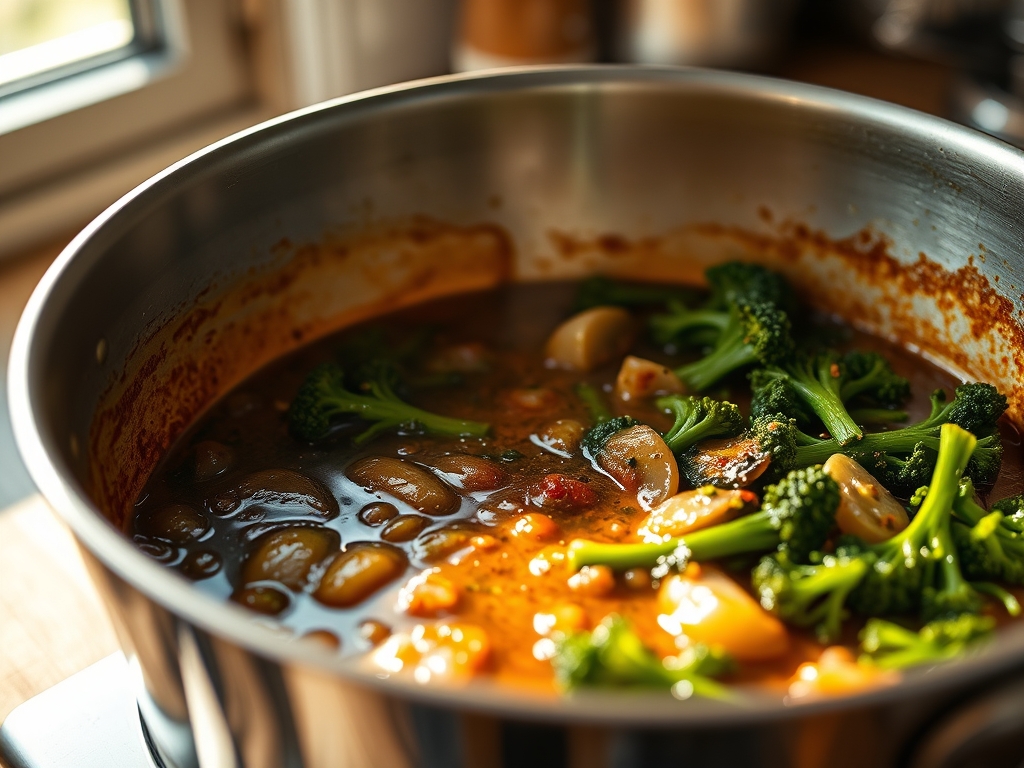
Bring a large pot of heavily salted water to a rolling boil. Use a digital scale to ensure your salt concentration is roughly 2 percent. Submerge the rapini for exactly 120 seconds. Immediately shock the greens in an ice bath to halt the enzymatic browning.
Pro Tip: This process, known as parboiling, leeches out the excess bitterness and softens the fibrous cellulose in the stems. Using a stainless steel spider strainer allows for rapid transfer, preserving the vibrant chlorophyll.
Step 2: Mechanical Moisture Extraction
Remove the greens from the ice bath and place them on a clean kitchen towel. Roll the towel tightly to squeeze out every possible gram of residual water.
Pro Tip: Water is the enemy of the Maillard reaction. If the rapini is wet when it hits the oil, it will steam rather than sear. Use a bench scraper to chop the stalks into manageable 3-inch segments after drying.
Step 3: The Cold-Start Infusion
Place your slivered garlic and olive oil into a cold 12-inch stainless steel saucier. Turn the heat to medium-low. Allow the garlic to gently dance in the oil until the edges are golden and the kitchen smells like a Roman trattoria.
Pro Tip: Starting with a cold pan allows the fat to deeply infuse with the garlic essence without burning the delicate aromatics. This creates a viscous, flavored base for the greens.
Step 4: High-Velocity Thermal Application
Increase the heat to medium-high. Add the chili flakes and the dried rapini to the pan. Use heavy-duty tongs to toss the greens constantly for 3 to 5 minutes. You are looking for localized charring on the florets.
Pro Tip: The high heat causes the sugars in the brassica to caramelize. This creates a sweet counterpoint to the piquant chili flakes. The tongs allow for superior mechanical control compared to a standard spatula.
Step 5: The Acidic Finish
Remove the pan from the heat. Deglaze the surface with the fresh lemon juice and toss one final time. Season with salt and pepper, then finish with a dusting of Pecorino Romano if desired.
Pro Tip: Lemon juice provides a bright top note that resets the palate. The citric acid acts as a chemical foil to the heavy lipids and the inherent bitterness of the greens.
Section B: Prep & Timing Fault-Lines:
The most common human error is the "Garlic Burn." If your heat is too high during Step 3, the garlic will turn black and bitter in seconds. If this happens, discard the oil and start over; there is no recovery from burnt garlic. Another timing issue involves the blanching step. If you leave the greens in the boiling water for more than 3 minutes, the stalks will lose their structural integrity and turn into a mushy paste that cannot be seared.
THE VISUAL SPECTRUM
Section C: Thermal & Visual Troubleshooting:
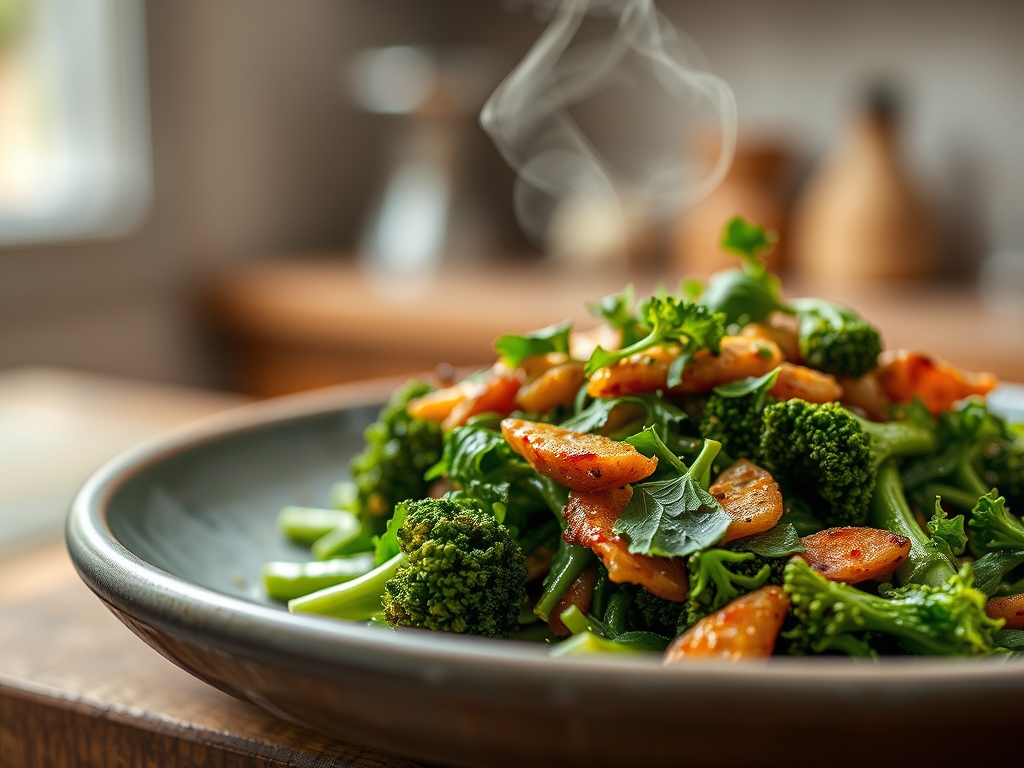
Referencing the Masterclass photo, your final product should exhibit a "High-Contrast Green." If your dish looks dull or olive-drab, you skipped the ice bath or overcooked the greens during the sauté phase. If the florets look soggy rather than crisp, you failed to extract enough moisture in Step 2. Look for the "Glistening Effect" in the photo; this indicates that the oil has properly emulsified with the small amount of lemon juice and residual moisture to coat every leaf. If the oil is pooling at the bottom of the plate, the emulsion has broken, likely due to excessive heat during the final seasoning.
THE DEEP DIVE
Macro Nutrition Profile:
A standard serving of Spicy Broccoli Rabe is a nutritional powerhouse. It provides roughly 140 calories, dominated by healthy monounsaturated fats from the olive oil. It is exceptionally high in Vitamin K, Vitamin A, and Vitamin C. The fiber content is significant, aiding in digestive health, while the glycemic load is near zero.
Dietary Swaps:
- Vegan: Omit the Pecorino Romano and replace it with nutritional yeast or toasted breadcrumbs for texture.
- Keto: This dish is naturally keto-compliant. Increase the olive oil for higher fat macros.
- GF: Ensure your chili flakes are processed in a gluten-free facility; otherwise, this dish is naturally gluten-free.
Meal Prep & Reheating Science:
To maintain the molecular structure during reheating, avoid the microwave. The microwave agitates water molecules, which will turn the rapini limp. Instead, flash-fry the leftovers in a hot skillet for 2 minutes. This restores the surface tension of the oils and maintains the "snap" of the stems.
THE KITCHEN TABLE
Why is my broccoli rabe so much more bitter than the restaurant version?
You likely skipped the heavy-salt blanching step. Salt displaces the bitter compounds in the cell walls. Also, ensure you are using enough fat; lipids coat the tongue and dampen the perception of bitterness.
Can I use frozen broccoli rabe for this recipe?
Negative. Frozen greens have undergone cellular rupture from ice crystals. They will never achieve the necessary char or structural snap required for this specific piquant profile. Stick to fresh, firm stalks.
What is the best tool for slicing the garlic?
Use a sharp mandoline or a very thin chef knife. You want translucent slivers, not chunks. Thin slices melt into the oil, creating a more uniform infusion and a better texture in the final bite.
Is there a substitute for lemon juice?
A high-quality Sherry vinegar or white balsamic can work. You need an acid with a pH low enough to cut through the oil. Avoid standard white distilled vinegar; it is too one-dimensional for this dish.