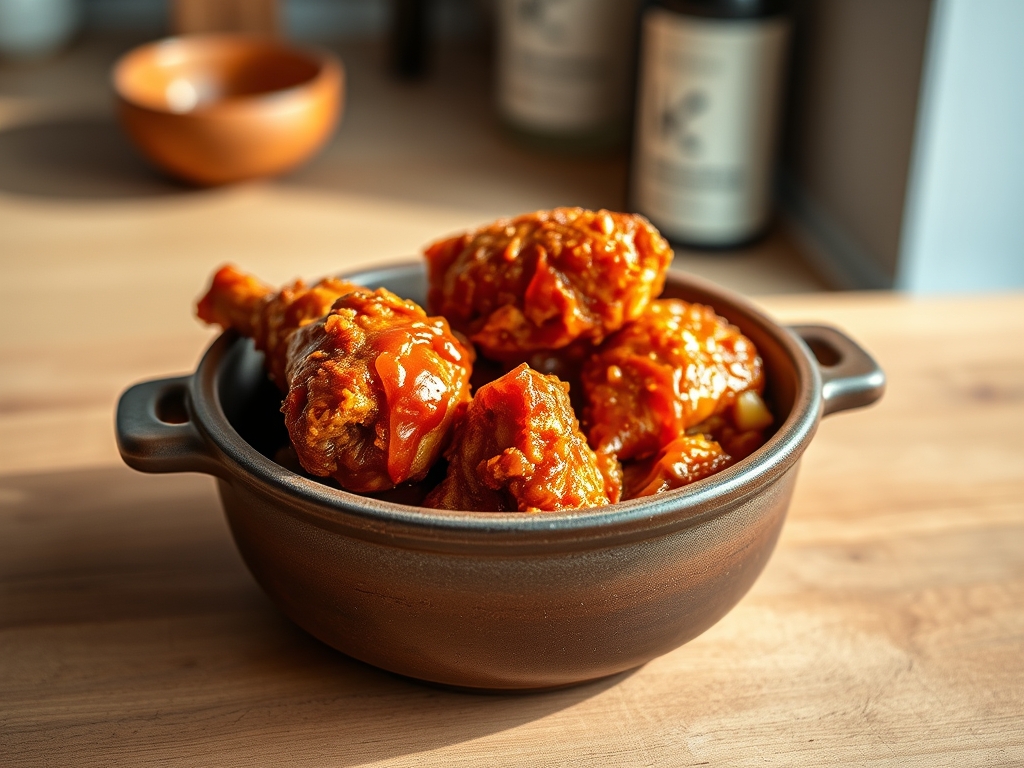
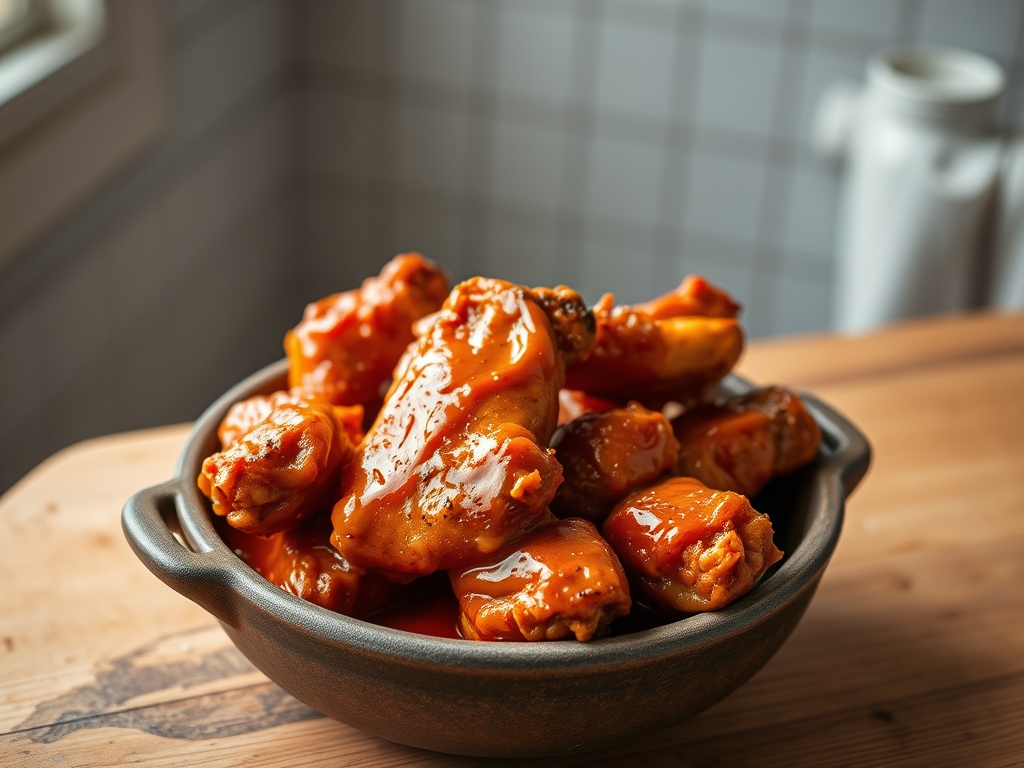
Listen to the sound of a high-performance kitchen at peak capacity. It is the rhythmic thrum of a deep fryer, the percussive clatter of a stainless steel mixing bowl, and the sharp, acidic sting of vinegar hitting the back of your throat. We are not just making a snack; we are engineering a masterpiece of aerodynamic protein and lipid-stabilized spice. Buffalo Chicken Wings represent the ultimate intersection of American comfort and rigorous molecular physics. The goal is a skin texture that mimics parchment paper in its crispness while maintaining a succulent, collagen-rich interior. Most home cooks fail because they treat the sauce as a topping rather than a chemical emulsion. We are here to audit that process. We are looking for the perfect suspension of capsaicin within a butter-fat matrix, ensuring every crevice of the wing is coated in a piquant, glossy lacquer that refuses to break. Prepare your station. We are about to transform raw poultry into a high-octane delivery system for heat and flavor.
THE DATA MATRIX
| Metric | Specification |
|---|---|
| Prep Time | 20 Minutes (Active) / 24 Hours (Curing) |
| Execution Time | 25 Minutes |
| Yield | 4 Servings (approx. 24 wings) |
| Complexity (1-10) | 6 (Precision heat management required) |
| Estimated Cost per Serving | $4.50 – $6.00 |
THE GATHERS
Ingredient Protocol:
- Chicken Wing Flats and Drumettes: 1.36kg / 3 lbs
- Frank's RedHot Original (or fermented cayenne sauce): 177ml / 0.75 cup
- Unsalted European-style Butter: 113g / 0.5 cup
- Kosher Salt: 18g / 1.2 tbsp
- Baking Powder (Aluminum-Free): 15g / 1 tbsp
- White Vinegar: 15ml / 1 tbsp
- Worcestershire Sauce: 5ml / 1 tsp
- Garlic Powder: 2g / 0.5 tsp
- Cayenne Pepper (Optional for heat boost): 1g / 0.25 tsp
Section A: Ingredient Quality Audit:
The most common failure point in Buffalo Chicken Wings is the moisture content of the skin. If your wings arrive sitting in a pool of purged liquid, the steam will prevent the Maillard reaction from occurring. To fix this, you must perform a dry-brine. Another critical error is using "light" or salted butter. Salted butter has inconsistent water content which can cause your emulsion to "break" or separate into a greasy mess. Always use high-fat European butter (82% butterfat or higher) to ensure a viscous and stable sauce. If your hot sauce is too thin, do not reduce it on the stove; this alters the vinegar's acidity profile. Instead, use the cold-butter whisking technique outlined in the Masterclass to achieve the correct body.
THE MASTERCLASS
1. The Desiccation Protocol
Pat the wings bone-dry using industrial-grade paper towels. Place them in a large stainless steel bowl and toss with the salt and baking powder. The baking powder raises the pH level of the skin, breaking down the peptide bonds and allowing it to crisp faster. Arrange the wings on a wire rack set over a sheet pan. Refrigerate, uncovered, for 12 to 24 hours.
Pro Tip: Use a digital scale for the baking powder. Too much will leave a metallic, alkaline aftertaste; too little and the skin will remain rubbery. This air-drying phase is essential for rendering the subcutaneous fat.
2. The Thermal Ascent
Preheat your oven to 218 degrees Celsius (425 degrees Fahrenheit) or prepare a deep fryer with peanut oil heated to 190 degrees Celsius (375 degrees Fahrenheit). If baking, place the rack in the upper third of the oven. The high heat is necessary to trigger the rapid evaporation of any remaining surface moisture.
Pro Tip: If using a fryer, use a long-stem fry thermometer to monitor the oil. When the wings are dropped, the temperature will plummet. You must adjust your burner to maintain a steady 175 degrees Celsius (350 degrees Fahrenheit) for optimal crisping without burning the proteins.
3. The Capsaicin Emulsion
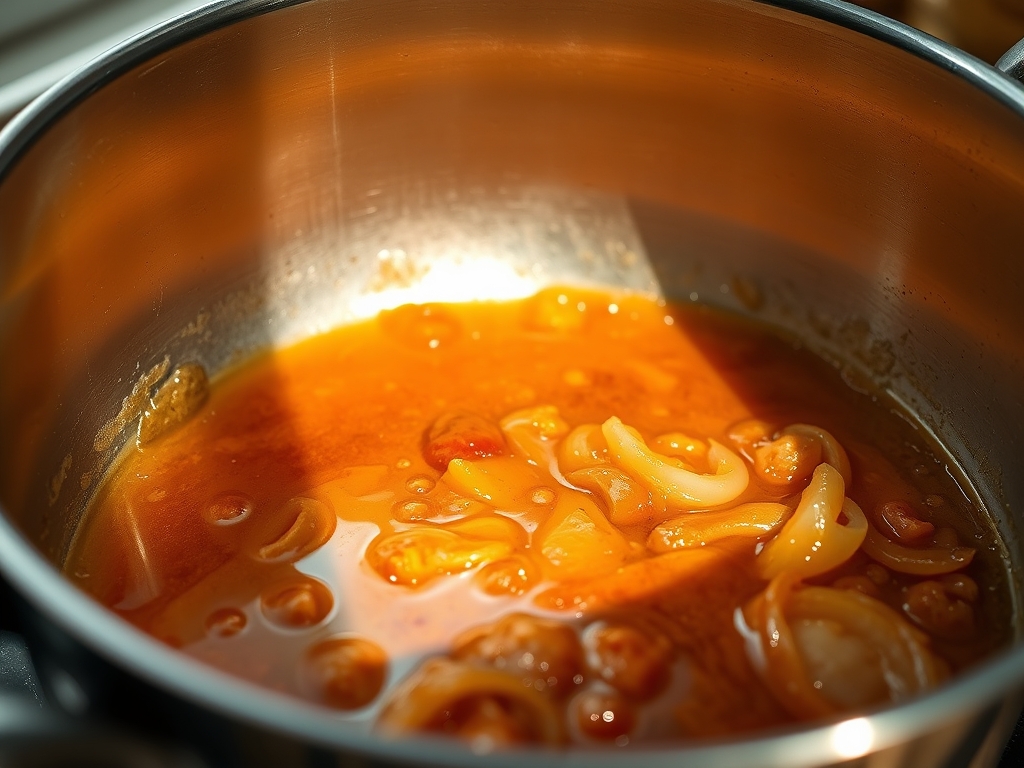
While the wings are cooking, place your hot sauce, vinegar, Worcestershire, and garlic powder in a small saucier. Bring to a light simmer over medium-low heat. Once simmering, remove from heat. Gradually whisk in the cold, cubed butter one piece at a time. This creates a stable emulsion where the fat molecules are suspended within the vinegar-based sauce.
Pro Tip: Do not boil the sauce once the butter is added. Excessive heat will cause the milk solids to separate from the fats, resulting in a thin, oily coating rather than a thick, viscous glaze.
4. The Kinetic Coating
Once the wings reach an internal temperature of 74 degrees Celsius (165 degrees Fahrenheit) and the skin is golden brown and blistered, transfer them immediately to a large, warm stainless steel bowl. Pour the warm emulsion over the wings. Use a bench scraper to ensure no sauce is left on the prep surface, then toss with a vigorous snapping motion of the wrist to aureate the sauce as it coats the wings.
Pro Tip: The wings must be "piping hot" when tossed. The residual heat from the chicken helps the sauce penetrate the crispy nooks and crannies while slightly tightening the emulsion upon contact.
Section B: Prep & Timing Fault-Lines:
Timing is the invisible ingredient. If you toss the wings and then let them sit for more than five minutes before serving, the steam from the meat will migrate outward and soften the skin. This is known as "structural degradation." To avoid this, ensure your guests are seated before the final toss. If your oven temperature is too low, the fat will not render quickly enough, leading to a "greasy" mouthfeel. Use an oven thermometer to verify your appliance's accuracy; many home ovens deviate by as much as 25 degrees.
THE VISUAL SPECTRUM
Section C: Thermal & Visual Troubleshooting:
Referencing the Masterclass photo, your wings should exhibit a "shattered glass" texture on the skin. If the wings look smooth and pale, they have not been cooked long enough or the baking powder was omitted. If the sauce looks "broken" or shows streaks of clear yellow oil, the emulsion failed because the sauce was too hot when the butter was added. A perfect Buffalo wing has a uniform, matte-orange glow. If you see dark black spots, your oven's "hot spots" are to blame; rotate the tray every 10 minutes. If the sauce is sliding off the wing and pooling at the bottom of the plate, the sauce lacks the necessary viscosity which can be fixed by whisking in another 15g of cold butter.
THE DEEP DIVE
Macro Nutrition Profile:
A standard serving of six wings (unbreaded) contains approximately 450-500 calories. The profile is dominated by fats (35g) and proteins (30g), with minimal carbohydrates (under 2g), provided no flour or sugar-based sweeteners are added to the sauce.
Dietary Swaps:
- Vegan: Substitute cauliflower florets for chicken. Use a vegan butter substitute made from avocado or olive oil to maintain the emulsion.
- Keto: This recipe is naturally Keto-compliant. Ensure the hot sauce contains no added sugars.
- GF: This recipe is naturally Gluten-Free. Verify that your Worcestershire sauce is a certified GF brand.
Meal Prep & Reheating Science:
To maintain molecular structure when reheating, avoid the microwave at all costs. The microwave agitates water molecules, steaming the wing from the inside out and ruining the skin. Instead, use an air fryer or oven at 200 degrees Celsius for 5-7 minutes. This re-renders the surface fats and restores the "crunch" factor.
THE KITCHEN TABLE
Why use baking powder on the wings?
Baking powder is a chemical leavener that creates tiny CO2 bubbles on the surface of the skin. This increases the surface area, allowing the skin to become significantly crispier and more textured during the frying or baking process.
Can I use margarine instead of butter?
Margarine is not recommended. It contains a higher water-to-fat ratio and various vegetable oils that do not emulsify as smoothly as dairy butter. This results in a thin, watery sauce that will fail to cling to the chicken.
How do I make the wings extra spicy?
To increase the piquant levels without thinning the sauce, infuse the butter with habanero peppers before whisking it into the hot sauce. Alternatively, add a half-teaspoon of high-purity capsaicin extract or extra cayenne powder during the simmering phase.
Why is my sauce separating on the plate?
This usually happens if the wings were not properly drained of excess oil before tossing. The residual frying oil interferes with the butter-vinegar emulsion. Always let wings rest on a wire rack for 60 seconds before the final toss.