Imagine the scent of a controlled explosion. That is the initial greeting of a jar of Fermented Kimchi when the seal finally yields to the pressure of carbon dioxide. It is not just cabbage; it is a living, breathing architectural marvel of microbiology. You are smelling the literal death of sugars and the glorious rebirth of lactic acid. This is the gold standard of the probiotic world. We are talking about a piquant profile that hits the back of your throat with a sharp, acidic brightness, followed immediately by the deep, earthy funk of salted shrimp and fish sauce. The texture must remain defiant. A soggy kimchi is a failure of engineering. We want a crunch that resonates through the jawbone, signifying that the pectin structures within the Napa cabbage have survived the osmotic onslaught of the brining phase. This is culinary infrastructure at its most volatile and rewarding. If you are looking for a quick pickle, turn back now. We are here to build a fermented masterpiece that evolves over months, not minutes.
THE DATA MATRIX
| Metric | Specification |
|---|---|
| Prep Time | 90 Minutes |
| Execution Time | 4 to 14 Days (Fermentation) |
| Yield | 4 Liters / 1 Gallon |
| Complexity (1-10) | 7 |
| Estimated Cost per Serving | $0.85 |
THE GATHERS
Ingredient Protocol:
- 2.3kg / 5lbs Napa Cabbage (approx. 2 large heads)
- 150g / 0.5 cups Coarse Sea Salt (Non-iodized)
- 500ml / 2 cups Water (Filtered)
- 30g / 4 tbsp Glutinous Rice Flour
- 200g / 1.5 cups Gochugaru (Korean Red Chili Flakes)
- 120ml / 0.5 cups Fish Sauce (Premium Grade)
- 50g / 3 tbsp Salted Shrimp (Saeujeot), minced
- 100g / 1 cup Garlic Cloves, minced
- 20g / 2 tbsp Fresh Ginger, grated
- 1 medium White Onion, grated
- 250g / 2 cups Daikon Radish, julienned
- 100g / 1 cup Scallions, cut into 2-inch lengths
Section A: Ingredient Quality Audit:
The primary failure point in Fermented Kimchi is the salt. If you use table salt containing iodine or anti-caking agents, you will effectively poison your microbial workforce. Iodine inhibits the growth of Lactobacillus, leading to a stagnant, bitter jar. Technical Fix: Use only pure solar-evaporated sea salt or Korean coarse salt (Cheonilyeom). If your cabbage feels rubbery instead of crisp after the initial salt soak, your brine concentration was too low. The goal is to draw out moisture via osmosis to create a hospitable environment for fermentation while maintaining cellular integrity. If the Gochugaru looks brown rather than vibrant red, it is oxidized and will produce a dull, metallic flavor. Always source vibrant, sun-dried flakes to ensure a clean, spicy finish.
THE MASTERCLASS

Step 1: The Osmotic Breakdown
Quarter your cabbage lengthwise and submerge each leaf in a heavy brine or rub the salt directly into the thick white ribs. This is where you utilize a large stainless steel mixing bowl to ensure even distribution. Let the cabbage sit for at least two hours, tossing every thirty minutes. Pro Tip: The cabbage is ready when the white ribs are flexible enough to bend without snapping. This indicates that the cellular turgor pressure has been sufficiently reduced, allowing the seasoning paste to penetrate the fibers later.
Step 2: The Porridge Foundation
While the cabbage wilts, grab a small saucier and whisk the glutinous rice flour into the filtered water over medium heat. Stir constantly until the mixture becomes a viscous, translucent slurry. Whisk in a tablespoon of sugar to provide an immediate fuel source for the bacteria. Pro Tip: This porridge acts as a stabilizer and a delivery mechanism. Without this starch base, your chili paste will simply slide off the cabbage and pool at the bottom of the jar, resulting in an unevenly seasoned product.
Step 3: The Aromatic Infusion
In a secondary bowl, combine your cooled rice porridge with the Gochugaru, fish sauce, minced shrimp, garlic, ginger, and grated onion. Use a digital scale to ensure your ratios are exact; fermentation is a game of percentages. Fold in the daikon and scallions. Pro Tip: This is the "Soek," or the stuffing. The sulfur compounds in the garlic and onion will infuse the brine, acting as natural preservatives while the fish sauce provides the nitrogen necessary for complex microbial metabolism.
Step 4: The Manual Integration
Rinse the cabbage three times in cold water to remove excess salt, then squeeze firmly. Using gloves, smear the chili paste onto every single leaf, ensuring the base of the head is well-coated. Pack the cabbage tightly into a glass fermentation crock, pressing down with a bench scraper or your fist to eliminate air pockets. Pro Tip: Oxygen is the enemy of anaerobic fermentation. By removing air pockets, you prevent the growth of "Kahm yeast" or mold, ensuring the Lactobacillus can dominate the environment and lower the pH safely.
Section B: Prep & Timing Fault-Lines:
Temperature control is the thermostat of flavor. If your kitchen is over 75 degrees Fahrenheit, the fermentation will happen too rapidly, producing a "fizzy" texture and a sharp, one-dimensional sourness. Technical Fix: If the ambient temperature is high, move the jar to a cooler basement or the refrigerator after only 12 hours of room-temperature exposure. Conversely, if your house is a refrigerator, you may need 3 to 4 days of counter time to kickstart the activity. Use a pH strip if you are unsure; a finished Fermented Kimchi should sit comfortably between 4.2 and 4.5.
THE VISUAL SPECTRUM
Section C: Thermal & Visual Troubleshooting:
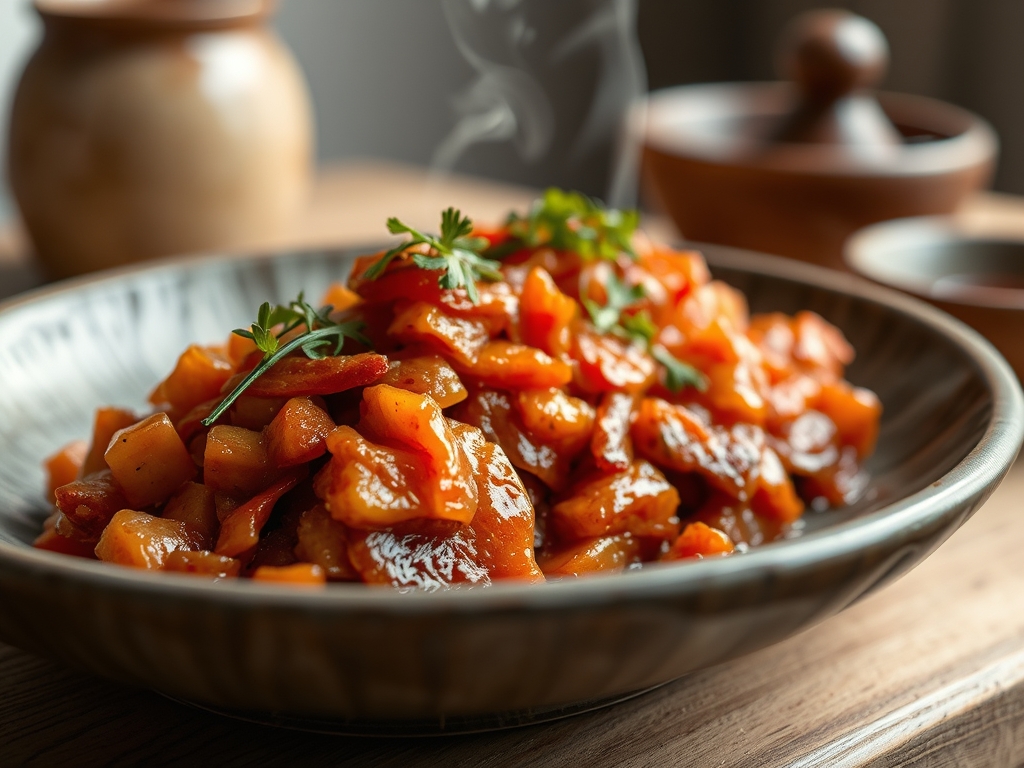
Referencing the Masterclass photo, notice the vibrant crimson hue and the slight translucency of the radish strips. If your kimchi appears "muddy" or brown, you likely over-processed the aromatics or used old chili flakes. If you see white spots forming on the surface, do not panic; this is often Kahm yeast, which is harmless but should be scraped off to prevent off-flavors. If the brine is cloudy, congratulations; that is the visual evidence of billions of probiotics at work. If the cabbage appears grey or feels slimy to the touch, the batch has been compromised by aerobic bacteria and must be discarded. The final product should look glistening and robust, with the red paste clinging to the leaves like a thick lacquer.
THE DEEP DIVE
- Macro Nutrition Profile: Per 100g serving, expect approximately 35 calories, 2g protein, 7g carbohydrates, and 2g fiber. It is a micronutrient powerhouse, loaded with Vitamins K, C, and B6.
- Dietary Swaps: To make this vegan, swap the fish sauce and salted shrimp for a mixture of soy sauce and kelp powder. To keep it strictly Keto, omit the rice flour porridge and use a small amount of xanthan gum to thicken the paste, though the fermentation may proceed more slowly.
- Meal Prep & Reheating Science: Never microwave your Fermented Kimchi if you want to keep the probiotics alive. Heat above 115 degrees Fahrenheit will kill the beneficial bacteria. If you are adding it to a stew (Kimchi Jjigae), do so at the end to preserve some enzymatic activity, or embrace the flavor shift as the heat renders the cabbage into a silky, savory melt.
THE KITCHEN TABLE
How long does it actually last in the fridge?
Properly submerged in its own brine, Fermented Kimchi can last up to 6 months. The flavor will become increasingly acidic and "funky" over time, making older batches perfect for pancakes or stews.
Why is my kimchi bubbling?
That is a sign of success. The bubbles are carbon dioxide, a byproduct of the bacteria consuming sugars. It indicates a healthy, active fermentation process is underway within the jar.
Can I use regular cabbage?
You can, but the structure is different. Green cabbage is much tougher and requires a longer brining time to soften the cellulose. Napa cabbage is preferred for its ability to absorb the paste.
Is the smell supposed to be that strong?
Yes. The combination of fermented seafood and sulfurous cabbage is intense. If it smells like rotting garbage or ammonia, however, that is a sign of spoilage rather than fermentation.