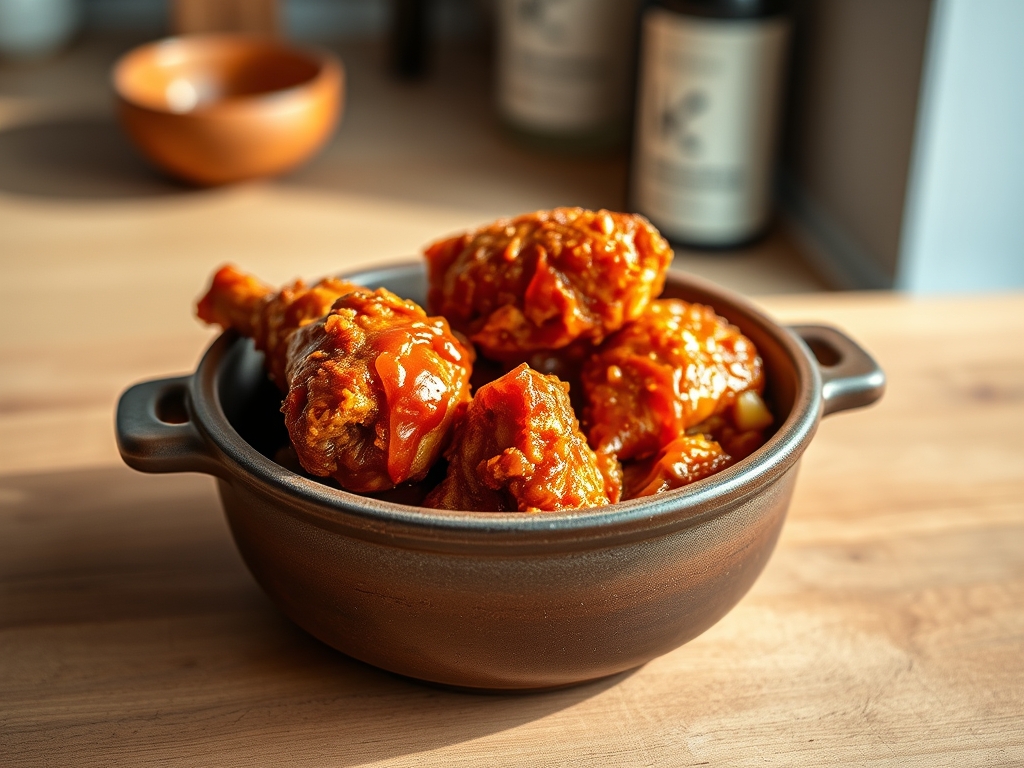
The air in a high-performance kitchen does not just carry scent; it carries a kinetic payload. When you drop a hand-pounded paste of bird's eye chilies and garlic into a shimmering pool of oil, you are not just cooking. You are initiating a high-velocity extraction of capsaicin and essential oils. This is the volatile core of Spicy Thai Basil Beef, a dish that demands respect for thermodynamics and timing. The goal is a delicate balance where the beef is deeply caramelized, the basil is wilted but vibrant, and the heat is distributed evenly across the palate rather than concentrated in jagged, painful spikes. We are looking for that elusive "wok hei," the breath of the wok, which requires your burner to operate at the edge of its physical limits. If you are not coughing slightly from the aerosolized spice, you are doing it wrong. This is culinary infrastructure at its most aggressive. We are here to audit your process, refine your technique, and ensure your final product is a masterclass in Thai street food engineering.
THE DATA MATRIX
| Metric | Specification |
|---|---|
| Prep Time | 15 Minutes |
| Execution Time | 6 Minutes |
| Yield | 2 Servings |
| Complexity (1-10) | 4 |
| Estimated Cost per Serving | $4.50 USD |
THE GATHERS
Ingredient Protocol:
- 450g / 1 lb Ground Beef (80/20 lean-to-fat ratio for optimal rendering)
- 40g / 1.5 oz Thai Bird's Eye Chilies (Adjust for personal tolerance)
- 30g / 6 cloves Garlic (Peeled and crushed)
- 60ml / 4 tbsp Oyster Sauce
- 15ml / 1 tbsp Light Soy Sauce
- 10ml / 2 tsp Dark Soy Sauce (For pigment and depth)
- 5ml / 1 tsp Fish Sauce (The primary salt and umami driver)
- 10g / 2 tsp Granulated Sugar (To balance the piquant profile)
- 100g / 2 cups Fresh Holy Basil leaves (Substitute with Thai Basil if necessary)
- 30ml / 2 tbsp Neutral Oil (High smoke point is non-negotiable)
- 2 Large Eggs (For the mandatory crispy-edge garnish)
Section A: Ingredient Quality Audit:
The primary failure point in Spicy Thai Basil Beef is the basil itself. If your Holy Basil is wilted or blackening before it hits the pan, the essential oils have already oxidized, leaving you with a metallic aftertaste. To fix this, shock the leaves in ice water for three minutes and spin them bone-dry in a salad spinner. If you cannot find Holy Basil (Tulsi) and must use Thai Basil, increase your chili count by ten percent to compensate for the missing peppery bite. Another common audit failure is the beef moisture content. Supermarket ground beef often contains excessive water. If your beef is grey and simmering rather than browning, you must drain the liquid mid-process and add a fresh tablespoon of oil to restart the Maillard reaction. Use a digital scale to ensure your sauce ratios are precise; the interplay between the fermented fish sauce and the sugar is a narrow window.
THE MASTERCLASS
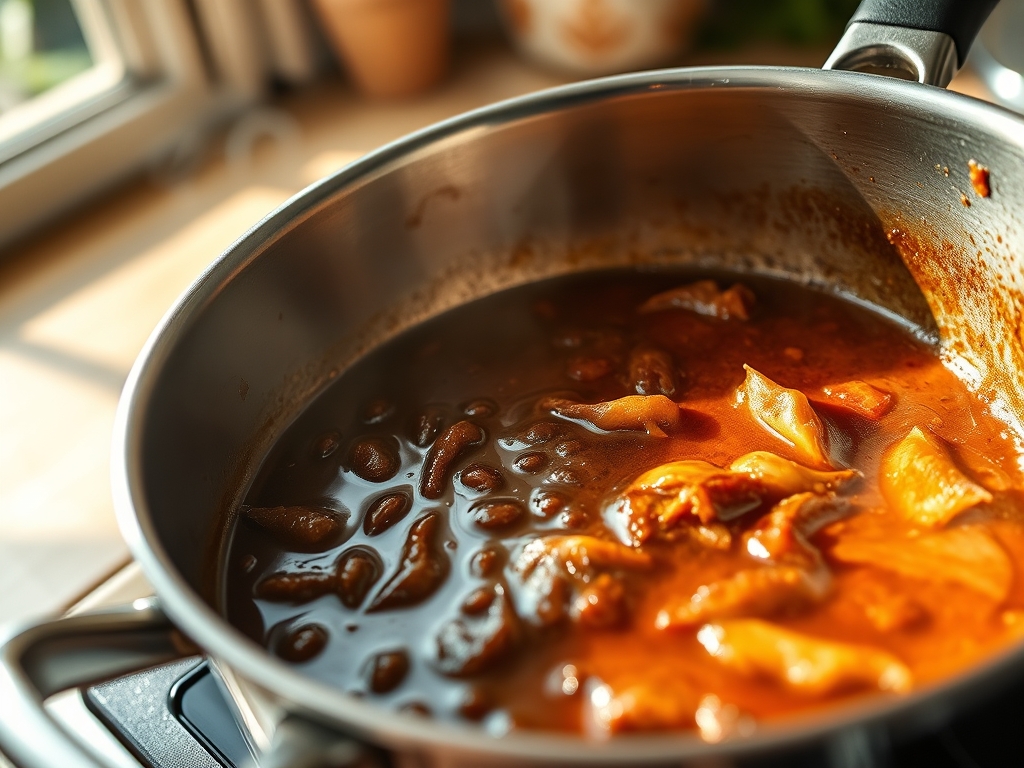
Step-by-Step Execution:
1. The Mortar and Pestle Integration
Place your chilies and garlic into a granite mortar. Pound them into a coarse, fibrous paste rather than a smooth puree. You want surface area, not liquid.
Pro Tip: Mechanical crushing ruptures cell walls more effectively than a knife's edge, releasing the sulfurous compounds in the garlic and the volatile oils in the chilies. Use a digital scale to weigh your aromatics for consistent heat levels across every batch.
2. The Crispy Egg Foundation
Heat your oil in a carbon steel wok until it reaches 190C / 375F. Crack the eggs directly into the shimmering oil. They should bubble and "lace" at the edges immediately. Spoon hot oil over the yolks until the whites are crispy and brown. Remove and set aside.
Pro Tip: This is a shallow-fry technique. The high heat creates a steam barrier that prevents the egg from absorbing excess grease, resulting in a light, aerated texture. Use a slotted stainless steel spatula to retrieve the eggs without tearing the delicate lace.
3. The Aromatic Infusion
Lower the heat slightly and add your chili-garlic paste to the remaining oil. Sauté for 45 seconds until the air becomes pungent and the garlic turns a pale golden hue.
Pro Tip: Do not burn the garlic. Burnt garlic introduces a bitter alkaloid that cannot be masked by sugar. If the pan is too hot, use a saucier or a small splash of water to drop the temperature instantly.
4. The Protein Maillard Phase
Increase the heat to maximum and add the beef. Use a bench scraper or a heavy wooden spatula to break the meat into small, uniform crumbles. Spread the meat across the surface of the wok and let it sear undisturbed for 60 seconds.
Pro Tip: This allows the Maillard reaction to create a complex crust. If you stir constantly, you lose the thermal energy required to render the fat and brown the proteins.
5. The Sauce Deglaze
Whisk your oyster sauce, soy sauces, fish sauce, and sugar in a small bowl. Pour the mixture around the edges of the wok so it sizzles and caramelizes before hitting the beef. Toss vigorously to coat every granule of meat.
Pro Tip: This technique, known as "searing the sauce," triggers a secondary caramelization that adds a smoky depth to the dish. A high-temp silicone spatula is excellent here for scraping the fond off the bottom of the pan.
6. The Basil Flash-Finish
Turn off the heat entirely. Dump the basil into the wok and fold it into the beef for 30 seconds. The residual heat will wilt the leaves without destroying their aromatic profile.
Pro Tip: Basil is highly thermolabile. If you cook it over active heat for more than a minute, the leaves turn black and lose their viscous essential oils. Serve immediately over jasmine rice.
Section B: Prep & Timing Fault-Lines:
The most frequent human error in this protocol is "crowding the pan." If you attempt to cook more than 500g of beef in a standard home wok, the thermal mass of the meat will drop the pan temperature below the boiling point. The result is a soggy, grey mess rather than a crispy, seared masterpiece. Audit your batch sizes. If you are cooking for a crowd, execute the dish in multiple high-heat passes. Furthermore, timing the rice is critical. Jasmine rice should be fluffy and slightly dry; use a 1:1.25 rice-to-water ratio and allow it to rest for ten minutes before fluffing with a fork.
THE VISUAL SPECTRUM
Section C: Thermal & Visual Troubleshooting:
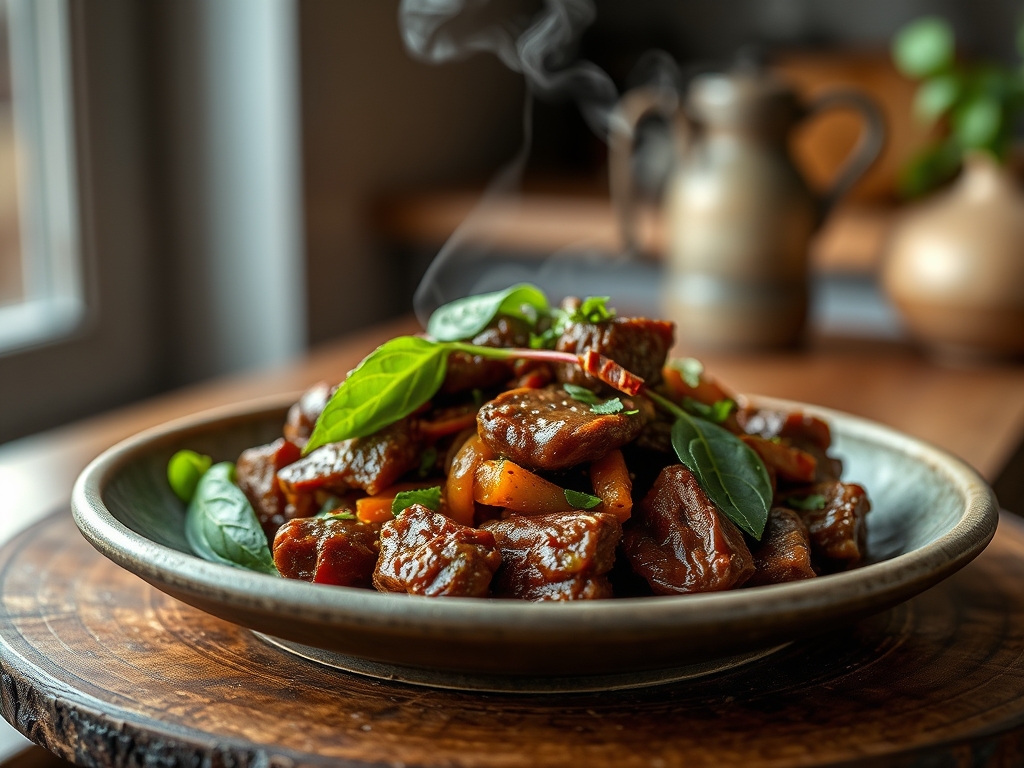
Referencing the Masterclass photo, your final dish should exhibit a deep, mahogany glaze that clings to the beef without pooling at the bottom of the plate. If your dish looks "wet," you failed to reduce the sauces or your heat was insufficient to evaporate the beef's moisture. The basil should be a dark, forest green; if it is bright neon, it is undercooked; if it is black, it is over-processed. The crispy egg must have a "crown" of golden-brown bubbles around the perimeter. If the egg is flat and white, your oil was not hot enough. Finally, look for the visible red flecks of chili skin. They should be distributed evenly, indicating a proper infusion during the aromatic phase.
THE DEEP DIVE
Macro Nutrition Profile:
A single serving of this Spicy Thai Basil Beef contains approximately 450 calories, 32g of protein, 12g of carbohydrates, and 28g of fat. The high protein content makes it an excellent choice for metabolic health, though the sodium content from the fish sauce and oyster sauce is significant. To reduce sodium, utilize a "low-sodium" soy sauce variant, though you will sacrifice some of the traditional fermented depth.
Dietary Swaps:
- Vegan: Replace the beef with 450g of crumbled extra-firm tofu or plant-based mince. Substitute the oyster sauce with a mushroom-based vegetarian stir-fry sauce and use a vegan "no-fish" sauce.
- Keto: This dish is naturally low-carb. Simply omit the sugar or replace it with a pinch of monk fruit sweetener. Serve over cauliflower rice instead of jasmine rice.
- Gluten-Free: Ensure your oyster sauce and soy sauces are certified GF (Tamari is a great soy substitute).
Meal Prep & Reheating Science:
To maintain the molecular structure during reheating, avoid the microwave. The high-frequency waves will turn the basil into a bitter slime and toughen the beef. Instead, flash-heat the leftovers in a dry pan over medium-high heat for 2 minutes. This re-activates the fats and preserves the integrity of the protein.
THE KITCHEN TABLE
Why is my Thai Basil Beef so salty?
You likely over-reduced the sauce or used a high-sodium soy brand. Balance the salinity by adding a squeeze of lime juice or an extra teaspoon of sugar to provide a counter-acidic or sweet note.
Can I use regular Italian Basil?
Technically yes, but the flavor profile will shift from "peppery and pungent" to "sweet and anise-like." If using Italian basil, add half a teaspoon of cracked black pepper to mimic the Holy Basil bite.
How do I get the egg edges so crispy?
The oil must be at the smoking point. Use more oil than you think; the egg should essentially be deep-fried. The temperature shock creates the characteristic "kai dao" texture.
Why does my garlic taste bitter?
You likely added it to the wok when the oil was too hot or left it too long before adding the beef. Garlic should only cook until fragrant, usually 30 to 45 seconds.
Is the fish sauce absolutely necessary?
Yes. Fish sauce provides the fundamental umami and fermented funk that defines Thai cuisine. Without it, the dish is merely a generic beef stir-fry. There is no direct substitute for its molecular complexity.