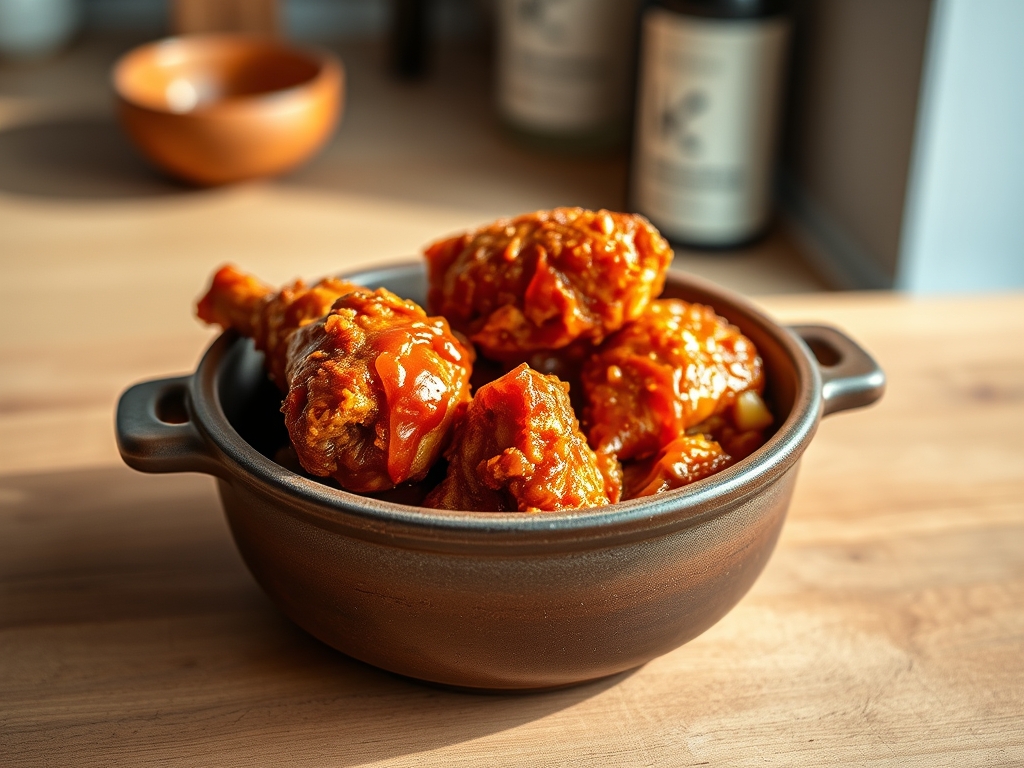
Listen to the sound of the fat rendering against the steel. It is not just a sizzle; it is a high-stakes chemical negotiation between ethanol and adipose tissue. When you commit to a rack of Spicy Bourbon Ribs, you are not just cooking dinner. You are managing a volatile laboratory of sugars and smoke. The bourbon brings more than just a woody depth; it acts as a solvent, stripping away the surface tension of the meat to allow the piquant heat of bird's eye chilies to penetrate deep into the muscle fiber. We are looking for that specific moment where the glaze transforms from a thin liquid into a viscous, mahogany lacquer that clings to the bone with desperate intensity. This is a masterclass in heat management and surface chemistry. If you fail to balance the pH of the sauce against the high-proof kick of the spirit, you end up with a bitter mess. If you nail it, you produce a rack of ribs that vibrates with complexity. Let's audit your infrastructure and get to work.
THE DATA MATRIX
| Metric | Specification |
|---|---|
| Prep Time | 45 Minutes |
| Execution Time | 5 Hours 30 Minutes |
| Yield | 4 Adult Servings |
| Complexity | 7/10 |
| Estimated Cost per Serving | $12.50 – $15.00 USD |
THE GATHERS
Ingredient Protocol:
- 2.2 kg / 5 lbs Pork Baby Back Ribs (Membrane removed)
- 120 ml / 0.5 cup High-proof Bourbon (At least 45% ABV)
- 200 g / 1 cup Dark Brown Sugar (Packed)
- 60 ml / 4 tbsp Apple Cider Vinegar
- 30 g / 2 tbsp Gochujang or Thai Chili Paste
- 15 ml / 1 tbsp Worcestershire Sauce
- 10 g / 2 tsp Smoked Paprika
- 5 g / 1 tsp Cayenne Pepper
- 15 g / 1 tbsp Kosher Salt
- 10 g / 2 tsp Coarse Black Pepper
- 4 Cloves Garlic (Microplaned)
Section A: Ingredient Quality Audit:
The most common failure point in Spicy Bourbon Ribs is the use of "bottom shelf" spirits. Cheap bourbon often contains high levels of fusel alcohols that turn acrid when reduced. If your bourbon smells like nail polish remover, your sauce will taste like a chemical fire. Fix this by selecting a wheated bourbon; the higher wheat content provides a smoother, sweeter profile that survives the reduction process. Secondly, check your spices. If that paprika has been sitting in your cabinet since the last lunar eclipse, it has lost its volatile oils. Rub a pinch between your fingers; if it does not release an immediate, smoky aroma, discard it. Finally, ensure your ribs are "Extra Meaty" cuts. Shiners, which are ribs where the bone is exposed due to poor butchery, will dry out and become brittle during the long smoke.
THE MASTERCLASS
Step-by-Step Execution:
1. The Surface Preparation and Dry Brine
Pat the ribs completely dry using lint-free towels. Use a bench scraper to remove any excess fat caps that exceed 3mm in thickness. Apply the salt, pepper, and paprika liberally. Use a digital scale to ensure your salt-to-meat ratio is exactly 1% by weight. Allow the meat to sit at room temperature for 40 minutes to initiate the osmotic process.
Pro Tip: This "dry brine" allows the salt to dissolve into the surface moisture and then be reabsorbed into the muscle. This breaks down the tight protein structures, ensuring the meat remains succulent even after five hours of thermal exposure.
2. The Low-Oxygen Smoke Phase
Set your smoker or oven to 107 degrees Celsius (225 degrees Fahrenheit). Place the ribs bone-side down. You are looking for a slow render of the intramuscular fat. Do not open the chamber for the first three hours. Maintaining a constant temperature is vital for the Maillard reaction to begin its slow dance on the surface.
Pro Tip: Use a dual-probe digital thermometer to monitor the ambient air temperature and the internal meat temperature simultaneously. Fluctuations of more than 10 degrees can cause the collagen to seize rather than melt.
3. The Bourbon Saucier Reduction
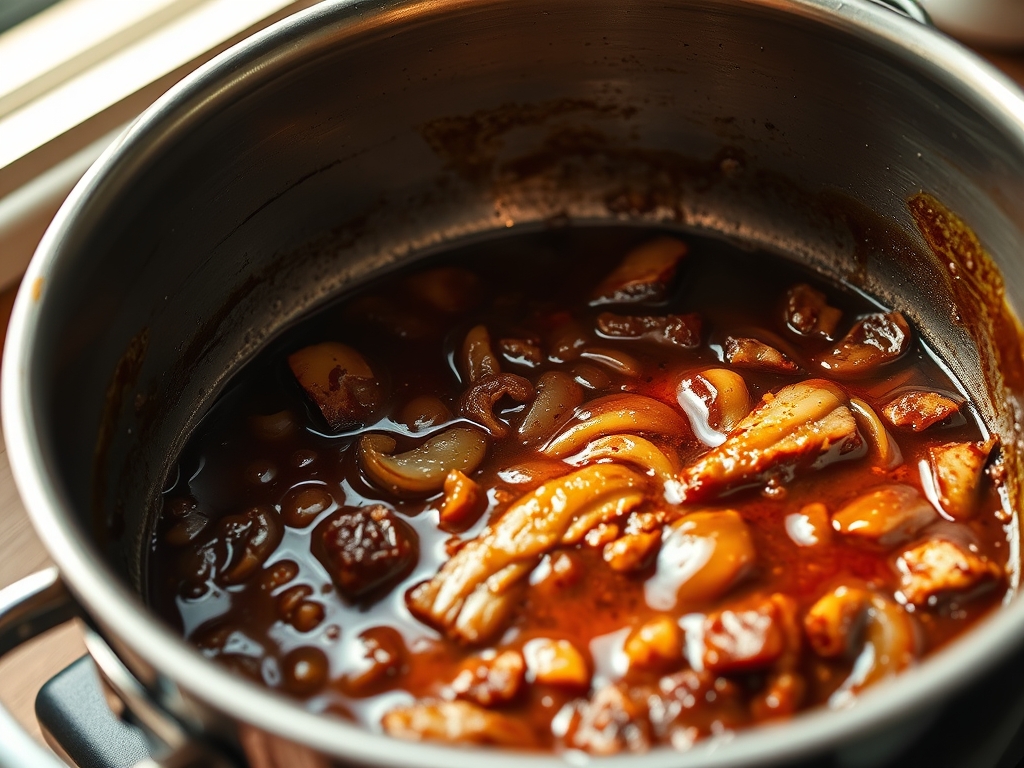
While the meat smokes, combine the bourbon, sugar, vinegar, and aromatics in a heavy-bottomed saucier. Bring to a simmer over medium-low heat. Use a whisk to aerate the mixture as it reduces. You are aiming for a viscous consistency that coats the back of a spoon.
Pro Tip: Reducing the bourbon concentrates the sugars and wood tannins. By using a saucier with rounded edges, you prevent the sugar from scorching in the corners, which would introduce a bitter carbon note to your glaze.
4. The Glaze Application and Tack-Up
Increase the heat to 135 degrees Celsius (275 degrees Fahrenheit). Brush the ribs with the bourbon glaze every 15 minutes for the final hour. This layering technique creates a "bark" that is both tacky and structural. The ethanol in the sauce will flash off, leaving behind a concentrated essence of oak and vanilla.
Pro Tip: This is the "tack-up" phase. The repeated layering creates a multi-laminated surface of caramelized sugars. If the sauce is too thin, it will run off; if it is too thick, it will burn. Aim for the consistency of warm maple syrup.
5. The Rest and Fiber Relaxation
Remove the ribs and tent them loosely with foil. Do not wrap them tightly, or the steam will destroy the crust you just spent hours building. Let them rest for 20 minutes before slicing between the bones.
Pro Tip: Resting allows the internal pressure to equalize. During cooking, moisture is pushed toward the center. Resting allows that moisture to redistribute, ensuring every bite is equally hydrated.
Section B: Prep & Timing Fault-Lines:
The most frequent human error is the "Panic Pull." When the ribs look dark, cooks often pull them too early, resulting in a rubbery texture. Use the "bend test" instead of a clock. Pick up the slab with tongs; if the surface cracks open, the collagen has successfully converted to gelatin. Conversely, if your sauce breaks (separates into oil and solids), you have overheated the sugars. To fix a broken sauce, add a teaspoon of boiling water and whisk vigorously to re-emulsify the fats and sugars.
THE VISUAL SPECTRUM
Section C: Thermal & Visual Troubleshooting:
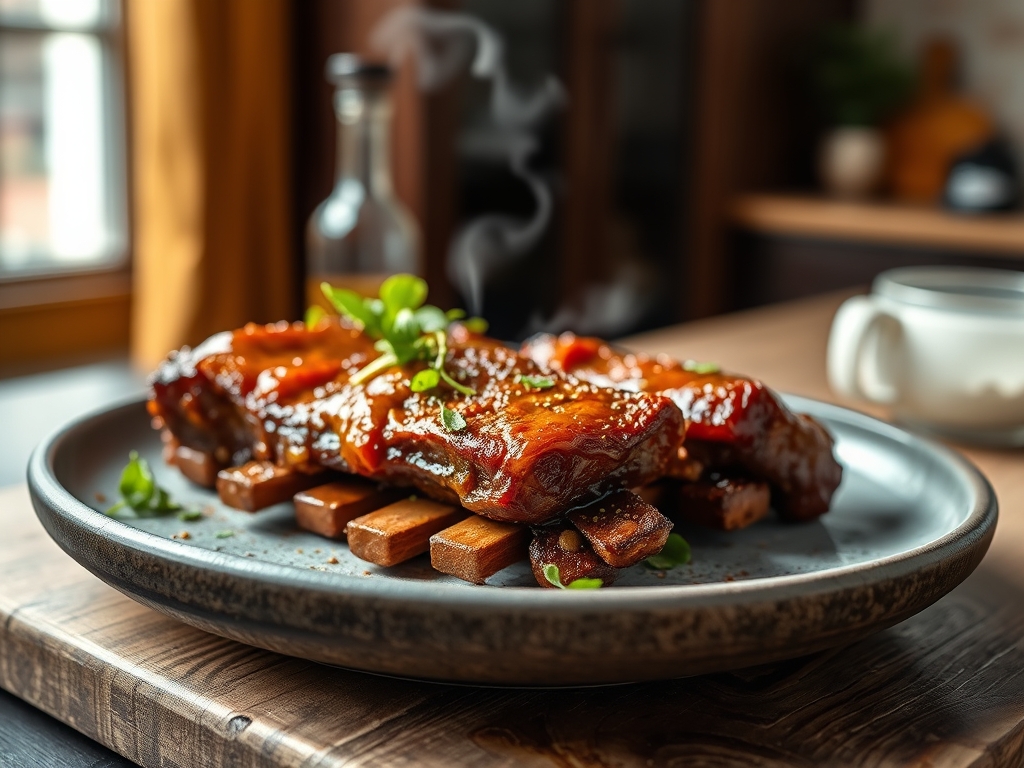
Referencing the Masterclass photo, notice the deep, crystalline sheen on the ribs. This is not "wet" sauce; it is a cured lacquer. If your ribs look dull or "dusty," you likely skipped the final glazing steps or your smoker was too dry. To fix this, mist the ribs with a 50/50 mix of apple juice and bourbon in the final 30 minutes. If the edges are black and acrid, your sugar content in the rub was too high for the heat level. Next time, move the ribs further from the direct heat source. The ideal visual cue is a "smoke ring," a pink band of meat just below the surface, which indicates a successful interaction between nitrogen dioxide and myoglobin.
THE DEEP DIVE
Macro Nutrition Profile
A standard serving (approx. 3 ribs) contains roughly 450 calories, 32g of protein, 28g of fat, and 18g of carbohydrates. The carbohydrate count is primarily driven by the bourbon reduction and brown sugar lacquer. While high in sodium, the dish provides significant amounts of Vitamin B6 and Potassium.
Dietary Swaps
- Vegan: Replace the pork with thick-cut "steaks" of King Oyster mushrooms or seitan logs. Use liquid smoke and vegan Worcestershire sauce.
- Keto: Replace the brown sugar with a monk fruit or erythritol-based gold sweetener. Use a sugar-free bourbon flavoring if you wish to avoid all alcohol-based calories.
- Gluten-Free: Ensure your Gochujang and Worcestershire sauce are certified GF, as many brands use barley malt or wheat flour as thickeners.
Meal Prep & Reheating Science
To maintain the molecular structure of the ribs when reheating, avoid the microwave. The electromagnetic waves agitate water molecules too violently, causing the meat to "steam" from the inside out and turning the glaze into a soggy mess. Instead, wrap the ribs in foil with a splash of bourbon or water and heat in a 150-degree Celsius (300-degree Fahrenheit) oven until the internal temperature reaches 74 degrees Celsius. This preserves the gelatinous texture of the rendered fats.
THE KITCHEN TABLE
Can I use Scotch instead of Bourbon?
You can, but proceed with caution. The heavy peat and medicinal notes of Scotch can overwhelm the pork. Bourbon is preferred because its corn-based mash bill aligns perfectly with the sweet and spicy profile of traditional BBQ.
Why are my ribs tough even after 5 hours?
This is likely a temperature stall. If the smoker stays below 100 degrees Celsius, the collagen won't melt. Ensure your ambient temperature is stable. If they are still tough, wrap them in butcher paper to accelerate the process.
What is the best wood for smoking these?
Oak or Hickory are the gold standards. They provide a sturdy, traditional smoke profile that can stand up to the aggressive flavors of bourbon and chili. Avoid light fruitwoods like apple, which will be drowned out by the glaze.
How do I make them even spicier?
Do not just add more cayenne; it will make the sauce gritty. Instead, infuse your bourbon with sliced habaneros for 24 hours before cooking. This integrates the heat into the liquid phase of the sauce for a smoother burn.