Stop treating your breakfast like a low-stakes hobby. We are here to talk about the structural integrity of the morning meal; specifically, the high-performance vehicle known as Spicy Avocado Toast. This is not just fruit on bread. This is a study in lipid-mediated flavor delivery. When you introduce a high-intensity heat source to the creamy, fatty matrix of a perfectly ripe Hass avocado, you are performing a biological hack. Capsaicin is fat-soluble. Without the lush, monounsaturated fats found in the avocado, those spicy molecules just bounce off your palate like rubber pellets. By integrating a viscous chili oil or a piquant pepper flakes into the green mash, you create a delivery system that coats the tongue and allows the heat to bloom slowly rather than stinging the throat. We are building a foundation of sourdough that acts as a structural substrate, toasted to a precise level of crunch to provide a textural counterpoint to the velvet interior. This is culinary engineering at its most delicious. Let us audit your kitchen and upgrade your output.
THE DATA MATRIX
| Metric | Specification |
|---|---|
| Prep Time | 8 Minutes |
| Execution Time | 5 Minutes |
| Yield | 2 Servings |
| Complexity | 3 / 10 |
| Estimated Cost per Serving | $3.75 USD |
THE GATHERS
Ingredient Protocol:
- 2 Thick Slices Sourdough Bread (approx. 150g / 5.3oz)
- 2 Large Ripe Hass Avocados (approx. 400g / 14oz)
- 30ml / 2 tbsp Extra Virgin Olive Oil
- 15ml / 1 tbsp Chili Crunch or Aleppo Pepper Oil
- 5ml / 1 tsp Fresh Lemon Juice
- 3g / 0.5 tsp Flaky Sea Salt (Maldon preferred)
- 1g / 0.25 tsp Red Pepper Flakes (for garnish)
- 10g / 2 tsp Microgreens or Radish Sprouts (for visual contrast)
Section A: Ingredient Quality Audit:
If your avocados are as hard as baseballs, do not attempt this. The lack of viscous lipids will ruin the mouthfeel. To fix under-ripe fruit, place them in a brown paper bag with a banana for 24 hours to accelerate ethylene gas production. If your sourdough is stale, do not toss it. Lightly mist the crust with water before toasting. This creates a steam barrier that softens the interior crumb while the exterior undergoes the Maillard reaction. If your chili oil lacks punch, heat it gently in a small saucier with a pinch of smoked paprika to revitalize the aromatic compounds before application.
THE MASTERCLASS
Step 1: The Maillard Foundation
Begin by slicing your sourdough into 1-inch thick slabs. Use a bench scraper to clear your station of any stray crumbs. Apply a thin layer of olive oil to both sides of the bread. Place the slices on a cast iron griddle or in a heavy-bottomed pan over medium-high heat. Toast until the surface is a deep, golden brown and the edges are slightly charred.
Pro Tip: The Maillard reaction is a chemical reaction between amino acids and reducing sugars that gives browned food its distinctive flavor. Using a digital scale to ensure your slices are of equal weight ensures they toast at the same rate, preventing one slice from carbonizing while the other remains pale.
Step 2: The Lipid Mash
Halve the avocados and remove the pits. Scoop the flesh into a stainless steel mixing bowl. Add the lemon juice and half of the sea salt. Use a fork or a potato masher to break down the fruit. You are looking for a chunky consistency; do not over-process into a smooth puree. You want internal structure.
Pro Tip: The acidity in the lemon juice does more than provide a piquant kick. It acts as an antioxidant, preventing the enzyme polyphenol oxidase from reacting with oxygen and turning your vibrant green mash into a muddy brown mess.
Step 3: The Heat Infusion
Fold in the chili crunch or pepper oil. Use a folding motion rather than stirring to ensure the oil is marbled through the avocado rather than fully emulsified. This creates "flavor pockets" where the heat is concentrated, providing a more dynamic eating experience.
Pro Tip: Capsaicin is hydrophobic. By folding it into the avocado fats, you are essentially creating a protective sheath around the heat molecules. This allows the spice to linger on the palate without causing immediate distress to the mucous membranes.
Step 4: Final Assembly and Garnish
Spoon a generous amount of the spicy avocado mixture onto the toasted bread. Use the back of a spoon to create small "craters" in the surface. Drizzle the remaining chili oil into these divots. Finish with a flourish of flaky salt and microgreens.
Pro Tip: Use a digital scale to ensure exactly 100g of avocado is applied to each slice for caloric consistency. The microgreens provide a structural "loft" that makes the dish look professionally plated while adding a fresh, peppery finish.
Section B: Prep & Timing Fault-Lines:
The most common failure in Spicy Avocado Toast is the "Soggy Substrate" syndrome. This occurs when the toast sits too long before the avocado is applied. The moisture from the fruit migrates into the bread, destroying the crunch. To avoid this, ensure your avocado mash is prepared while the bread is still in the pan. Another timing error is temperature mismatch. If the toast is too hot, it will begin to "cook" the avocado, turning the fats rancid and the color dull. Let the toast rest for 60 seconds on a wire rack to allow steam to escape before topping.
THE VISUAL SPECTRUM
Section C: Thermal & Visual Troubleshooting:
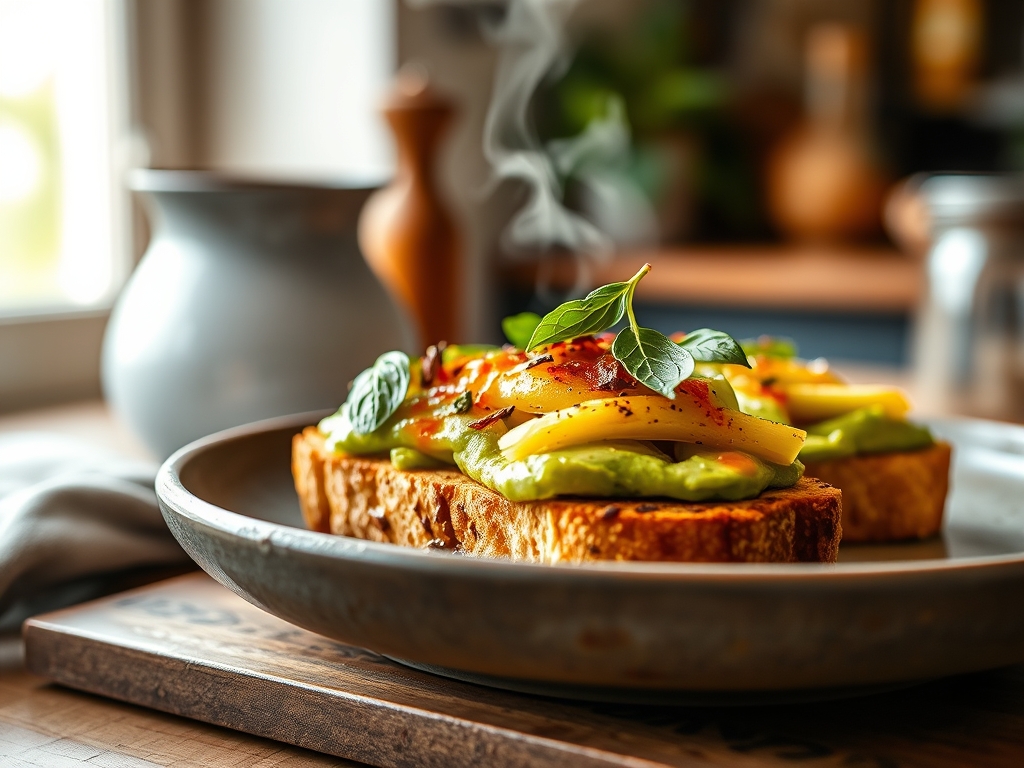
Referencing the Masterclass photo, your Spicy Avocado Toast should exhibit a "High-Contrast Green." If your avocado looks grey or muted, your lemon juice concentration was too low or your fruit was over-exposed to air. If the toast looks pale, you likely crowded the pan, which trapped steam and prevented browning. The ideal visual cue is a "Lava Flow" effect where the red chili oil sits in the green valleys of the mash. If the oil is soaking in and disappearing, your avocado mash is too warm. Chill the bowl in the fridge for five minutes before mashing to maintain the viscous integrity of the lipids.
THE DEEP DIVE
Macro Nutrition Profile
A single serving of this Spicy Avocado Toast provides approximately 380 calories. You are looking at 22g of healthy monounsaturated fats, 35g of complex carbohydrates (primarily from the sourdough fermentation process), and 8g of fiber. The capsaicin in the peppers can also provide a minor thermogenic boost, increasing your metabolic rate for a short period after consumption.
Dietary Swaps
- Vegan: This recipe is naturally vegan. To increase protein, add a layer of smashed chickpeas under the avocado.
- Keto: Replace the sourdough with a toasted "chaffel" (cheese and egg waffle) or a thick slice of roasted cauliflower.
- Gluten-Free: Utilize a high-quality GF bread, but be sure to toast it twice as long. GF breads lack the protein structure to hold up to heavy toppings without significant browning.
Meal Prep & Reheating Science
Avocado toast does not reheat well due to the delicate nature of the fats. However, you can prep the "Spicy Mash" up to 4 hours in advance if you press plastic wrap directly onto the surface to eliminate air gaps. If you must transport it, keep the toast and the mash in separate containers. Use a toaster oven to revive the bread for 2 minutes at 350F before assembly. Never microwave avocado; the heat will break down the delicate oils and create a bitter, metallic flavor profile.
THE KITCHEN TABLE
Why does my sourdough get too hard to bite?
You are likely over-toasting or using bread that is too dry. Aim for a "Golden-Brown" rather than "Dark-Brown" finish. Brush with a bit more olive oil to keep the crumb supple while the exterior stays crisp.
Can I use bottled lime juice instead of fresh lemon?
Bottled juices often contain preservatives that can alter the flavor of the avocado. Fresh lemon provides a cleaner acidity. If you must use lime, ensure it is 100% juice with no added oils or sugars.
My chili oil is too spicy. How do I fix it?
Dilute the heat by mixing the chili oil with an equal part of plain extra virgin olive oil. This lowers the capsaicin concentration per milliliter while maintaining the viscous texture required for a proper mouthfeel.
What is the best way to store leftovers?
You don't. The molecular structure of a mashed avocado begins to degrade immediately. If you have extra mash, store it in an airtight container with the avocado pit inside and eat it within 6 hours.